
Custom CNC Machining Service Factory for Precision Parts
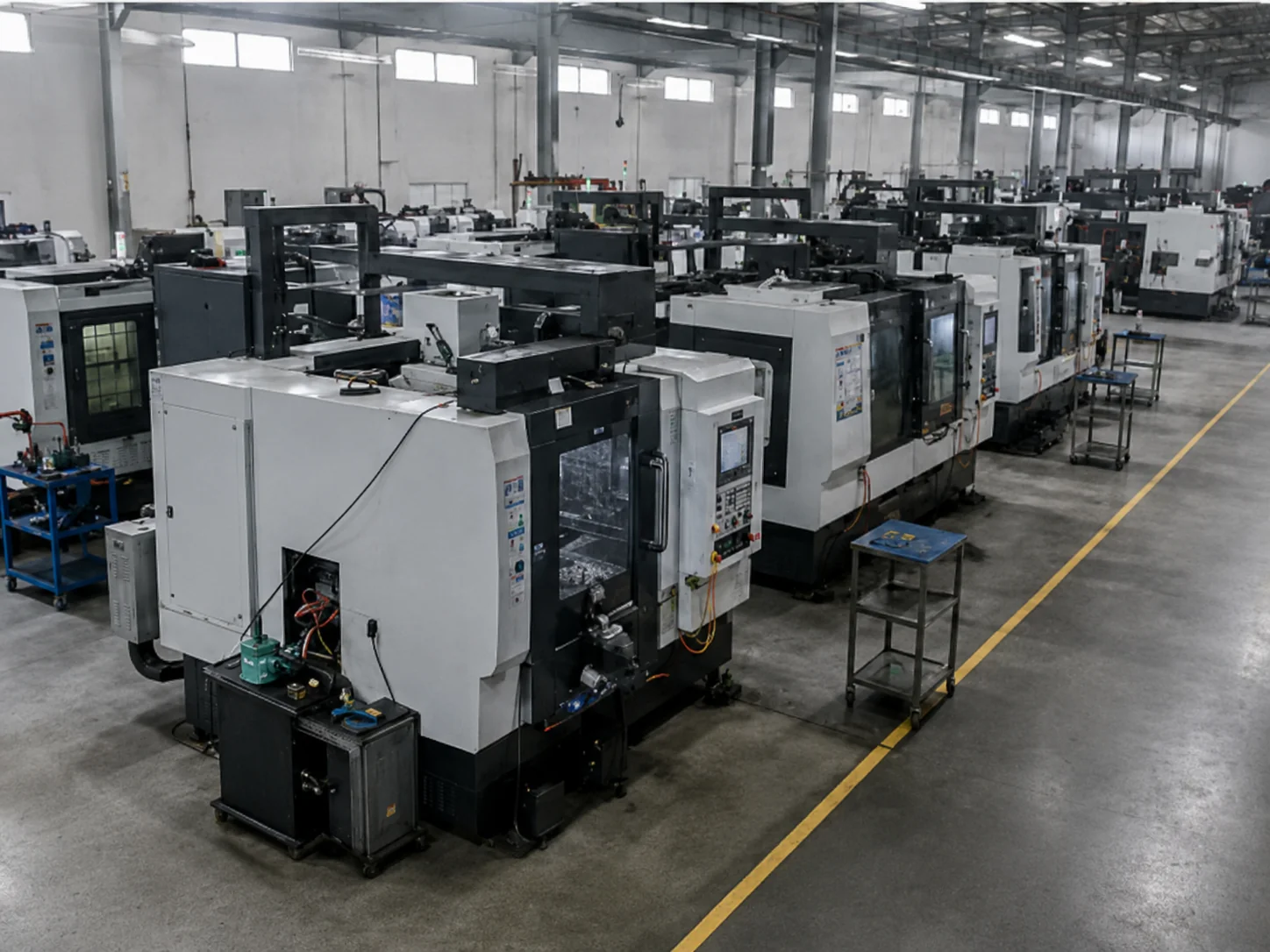
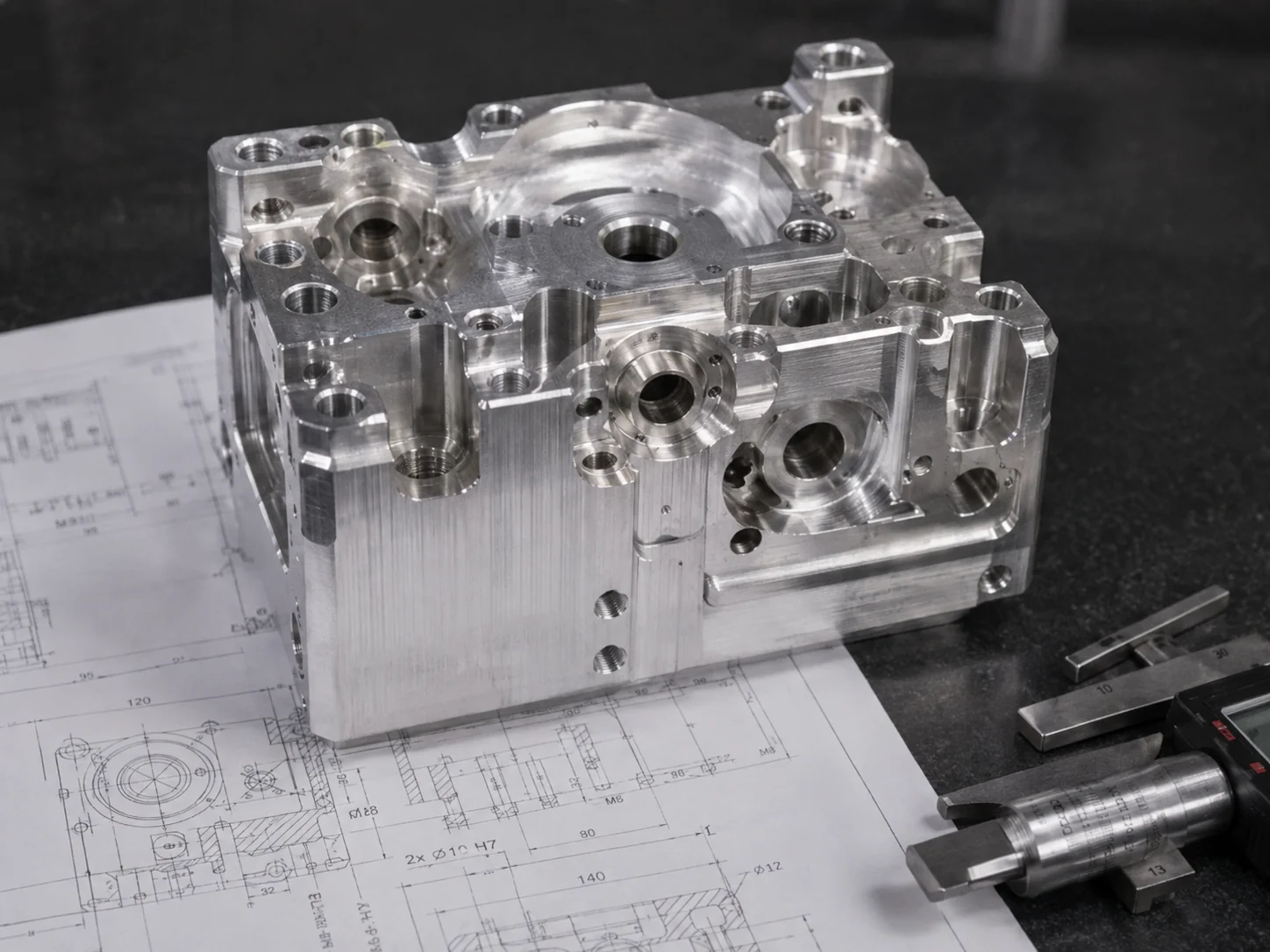
LuckyHxs manufactures custom metal and engineering-plastic components directly from customer drawings. We review part geometry, functional datums, tolerances, quantity and inspection requirements before selecting CNC turning, milling, Swiss, turn-mill or another suitable machining route.
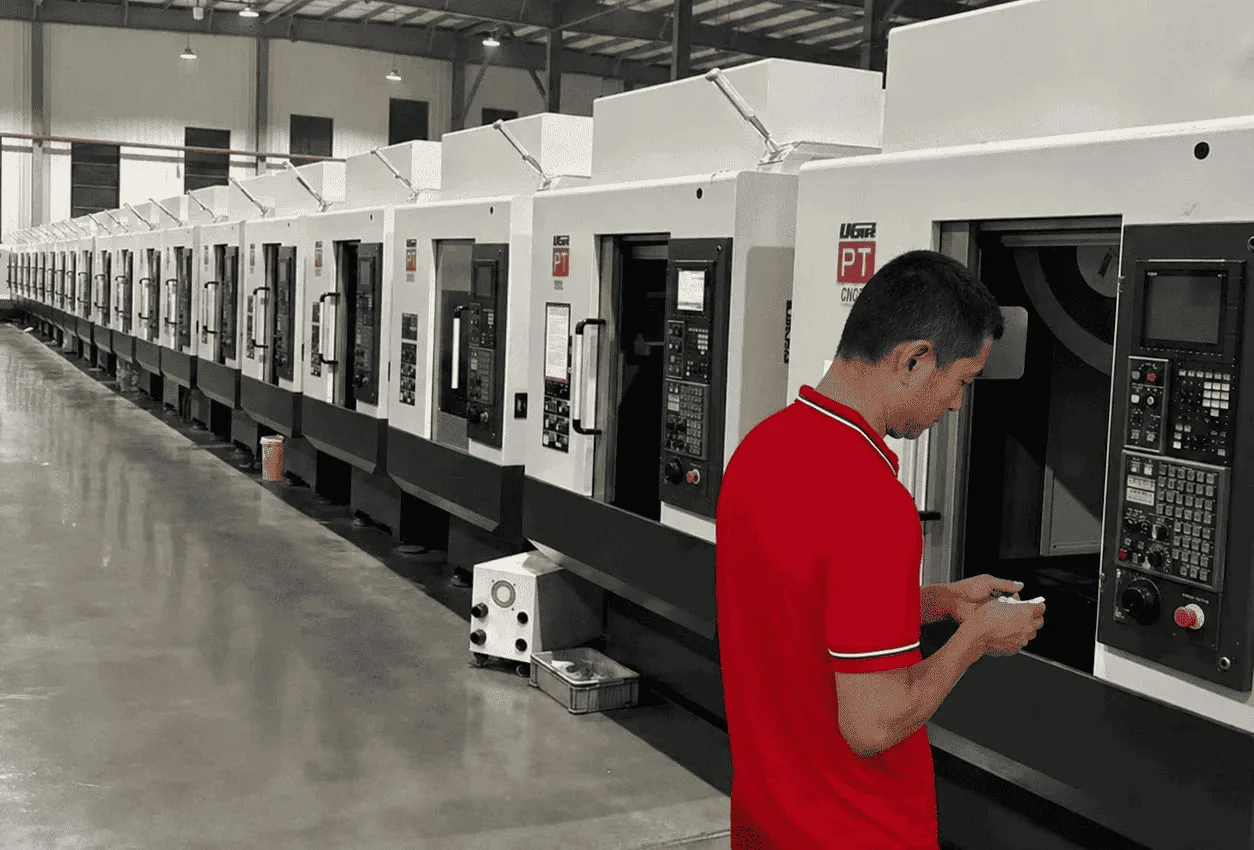
CNC Machining Factory at a Glance
Core manufacturing capabilities and specifications for made-to-drawing components.
Supply Type
Made-to-Drawing CNC Components
Primary Processes
Turning / Milling / Swiss / Turn-Mill / Automatic Lathe / Wire EDM
Products
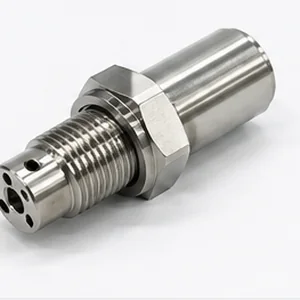
Shafts / Bushings / Housings / Brackets / Fittings / Valves / Sensor Components / Custom Parts
Materials
Aluminum / Stainless / Brass / Copper / Steel / Titanium / Selected Plastics
Tolerance
Standard Reference ±0.01 mm
Inspection
100% Before Shipment (Method selected by feature)
A CNC Machining Factory Should Choose the Route Around Your Drawing
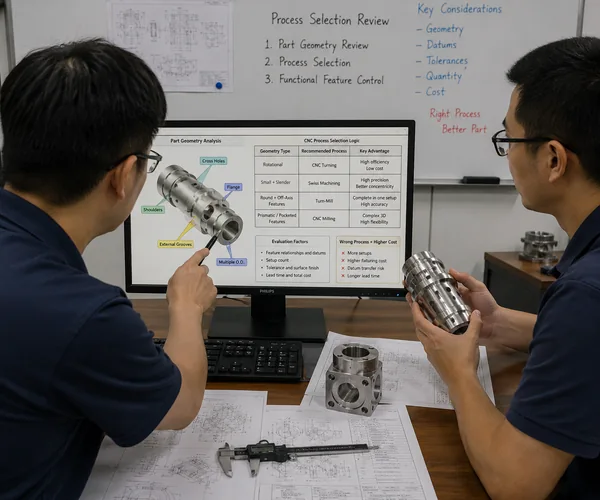
LuckyHxs does not treat "Turning", "Milling", or "Swiss" as interchangeable marketing labels. The manufacturing route must follow the geometry—not the machine name.
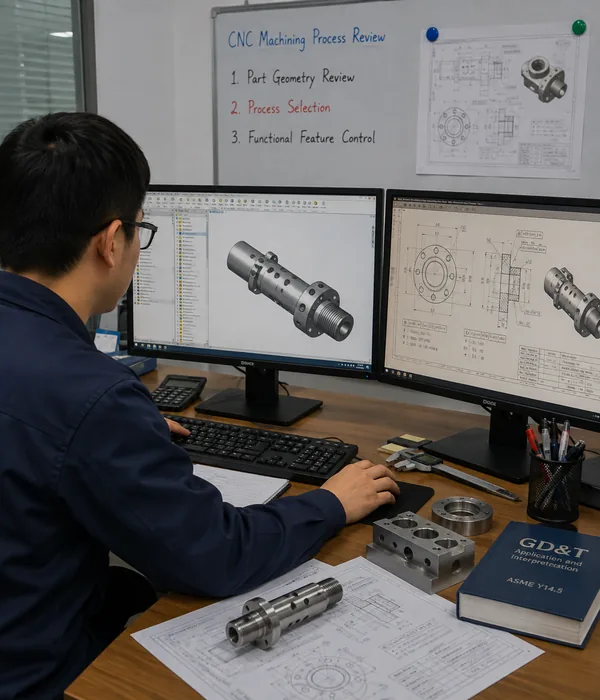
Part Geometry Review
Analyze the 2D drawing and 3D CAD to identify primary rotational axes, prismatic features, and critical-to-quality (CTQ) datums.
Process Selection
Assign the geometry to the most efficient machine type (e.g., Swiss for slender parts, Turn-Mill for off-axis features) to minimize setups.
Functional Feature Control
Program toolpaths and design workholding that prioritize the relationship between mating interfaces, not just isolated dimensions.
Custom CNC Machined Parts We Manufacture to Customer Drawings
Categorized by functional application and structural geometry.
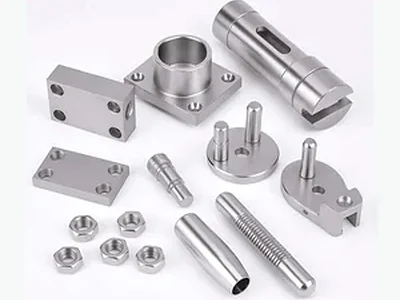
Precision Shafts, Pins & Rotational Components
When rotational stability is required, we control runout across multiple stepped diameters. Small slender pins are routed to Swiss machining to prevent deflection.
Typical: Motor Shafts, Locating Pins
Watch Point: Common Axis, Runout
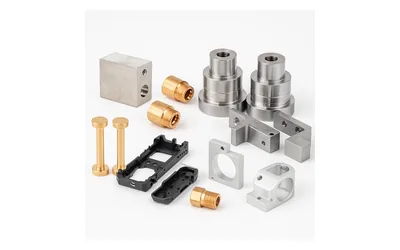
Bushings, Sleeves, Spacers & Guide Components
For guidance and spacing, controlling the ID-to-OD relationship is critical. We monitor wall thickness uniformity to prevent ovality during thin-wall turning.
Typical: Guide Bushings, Spacer Sleeves
Watch Point: Concentricity, Thin Wall
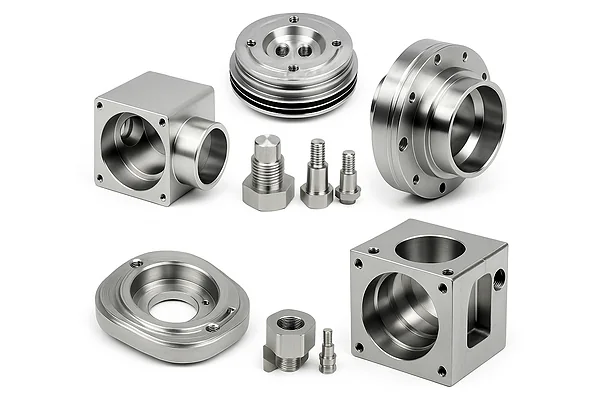
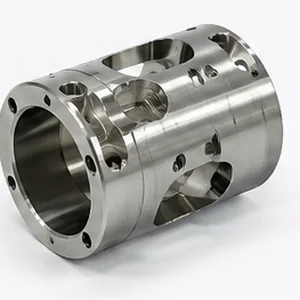
CNC Machined Housings & Enclosures
Protecting internal electronics requires precise pocket milling and flat sealing surfaces. We evaluate 5-axis routing to reduce setups on multi-face enclosures.
Typical: Sensor Housings, Control Cases
Watch Point: Internal Cavity, Flatness
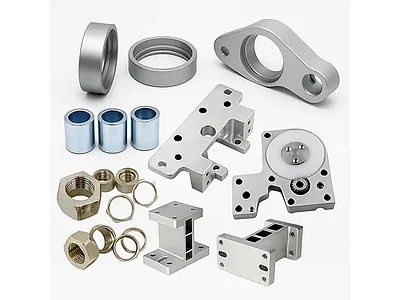
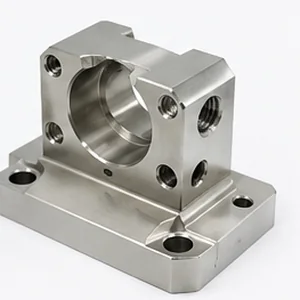
Machined Brackets, Mounts & Structural Parts
Assembly repeatability depends on hole pattern accuracy relative to the mounting datum. We prioritize perpendicularity and parallelism during milling.
Typical: Motor Mounts, Base Plates
Watch Point: Hole Position, Datum
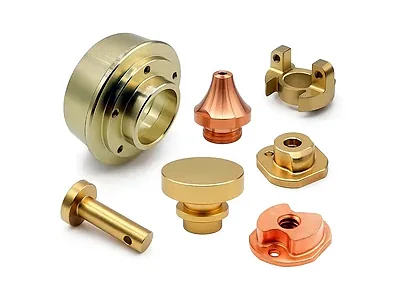
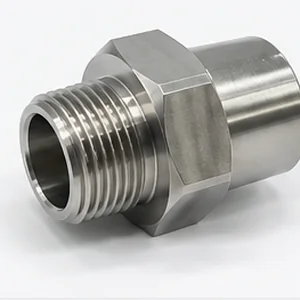
Fittings, Adapters & Threaded Components
Secure connections demand strict thread fit and shoulder positioning. Turn-mill centers handle hex bodies with cross-holes in a single operation.
Typical: Fluid Connectors, Threaded Inserts
Watch Point: Thread Fit, Burr
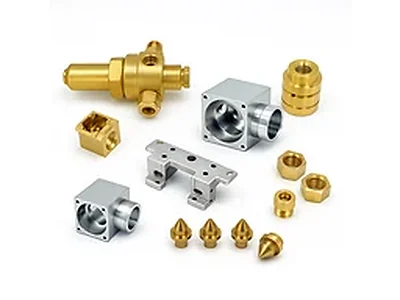
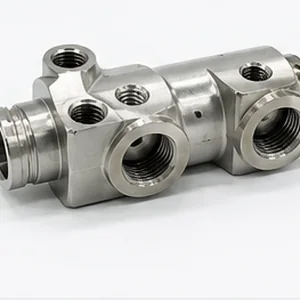
Valve, Nozzle, Manifold & Fluid-Control
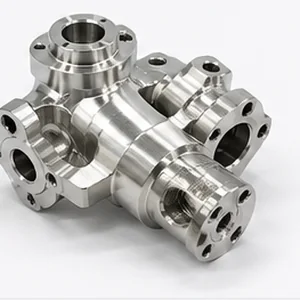
Flow paths require precise port intersections without internal burrs. We machine sealing surfaces and internal passages for fluid-control assemblies.
Typical: Valve Bodies, Manifolds
Watch Point: Port Intersection, Sealing Face
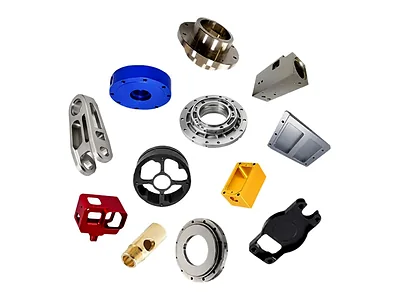
Sensor, Motor & Electronic Components
Instrument integrity relies on connector alignment and mounting interfaces. We machine probe bodies and encoder parts where alignment is critical.
Typical: Sensor Bodies, Motor Components
Watch Point: Alignment, Connector Position
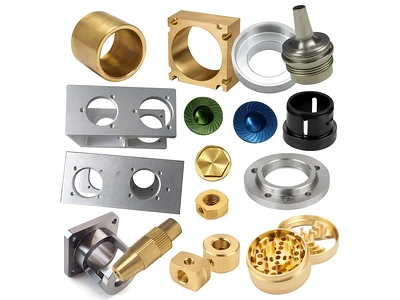
Complex Multi-Feature & Custom Parts
A custom CNC part is one functional geometry, not isolated dimensions. We evaluate multi-axis routes for components with complex angular relationships.
Typical: Hybrid Turn-Mill Parts
Watch Point: Multi-Datum Relationship
Different Parts, Different Functional Geometry
Do not buy a CNC part only by its product name. Buy it by drawing, functional geometry, and inspection requirements.
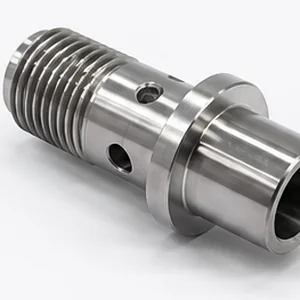
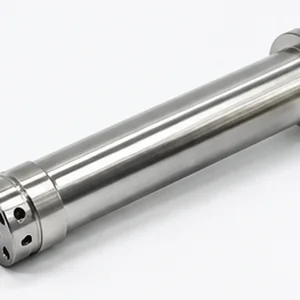
CNC Machining Materials for Custom Parts
Material Grade PASS ≠ Correct Manufacturing Condition.
Aluminum (6061, 6063, 7075)
Typical for housings and brackets. We monitor thin-wall residual stress to prevent distortion before final fit.
Stainless Steel (303, 304, 316L)
Typical for shafts and valves. We manage tool wear and heat to control internal burrs and thread quality.
Brass & Copper (H59, C3604)
Typical for connectors and inserts. Excellent machinability for complex turn-mill geometries.
Free-Machining Steel (1214, 1215)
Typical for repeat turned pins and studs, offering stable batch production.
Titanium (Project-Specific)
High strength-to-weight ratio. Requires specialized tooling and rigid setups.
Engineering Plastics (POM, PTFE)
Machined for insulation or low-friction applications where suitable.
Plan Final Fit Before Surface Finishing
Machining Complete ≠ Final Functional Part Complete. Does the critical dimension apply before or after final finishing?
One Factory, Different CNC Routes for Different Geometry
We do not force every drawing onto the same machine. The machining route is selected according to geometry, tolerance, quantity, and functional relationships.
| Part Geometry | Process Selected | Typical Part |
|---|---|---|
| Primarily Rotational | CNC Turning / CNC Lathe | Shaft / Bushing / Sleeve / Simple Fitting |
| Small + Slender (High L/D Ratio) | Swiss CNC Machining | Small Shaft / Pin / Connector Insert |
| Rotational + Off-Axis Features | Turn-Mill | Cross-Hole Shaft / Ported Sleeve / Complex Fitting |
| Prismatic / Pocketed | CNC Milling | Housing / Bracket / Base Plate |
| Complex Multi-Surface | Multi-Axis / 5-Axis Evaluation | Complex Housing / Multi-Angle Component |
| Special Sharp / Difficult Profile | Wire EDM where appropriate | Custom Extrusion Die / Sharp Corner Part |
What Actually Drives a CNC Machining Quote?
Hourly Rate Alone ≠ Total CNC Project Cost. A lower hourly rate can still produce a higher final quote if the part needs more setups or longer cycle times.
1. Material
Raw stock cost, machinability, and tool wear impact pricing.
2. Geometry
Deep pockets and thin walls increase manufacturing difficulty.
3. Setup
Multiple refixturing steps add time and datum transfer risk.
4. Machining Time
Determined by tool paths, material hardness, and feature volume.
5. Tolerance
Tighter tolerances require slower feeds and more control.
6. Quantity
Higher volumes amortize setup and programming costs.
7. Inspection
Complex CMM verification or custom gauges add to the quote.
8. Finish / Lead Time
Post-processing and expedited schedules affect final cost.
Why CNC Projects Fail Even When the Drawing Looks Straightforward
Common risks in custom manufacturing procurement.
The Part Is Machinable, but the Wrong CNC Process Was Chosen
Individual Dimensions Pass, but the Complete Functional Geometry Fails
Prototype Passes, but Production Quality Drifts Across Repeat Batches
3. The Parts Match the Drawing—but It Is the Wrong Revision
4. The Material Grade Is Correct, but the Condition Is Wrong
5. Tightly Toleranced, but Critical Features Are Not Prioritized
6. Simple CAD Becomes Difficult Once Tool Access Is Considered
7. Holes Pass Individually but the Final Interface Still Fails
8. Machining Passes, but Post-Processing Changes Final Fit
9. Inspection Says PASS, but Method Doesn't Match Function
The Part Is Machinable—but Is It on the Right CNC Process?
"Can be machined" does not equal "Should be machined that way." The wrong process increases setup count, fixture cost, datum transfer risk, and total cost.
Process Selection Logic
- Rotational → CNC Turning
- Small + Slender → Swiss Machining
- Round + Off-Axis → Turn-Mill
- Prismatic / Pocketed → CNC Milling
The right CNC process starts with the part geometry—not the machine name.
Individual Dimensions Pass, but the Complete Functional Geometry Fails
Individual Dimensions PASS ≠ Complete Functional Geometry PASS.
SHAFT
HOUSING
BRACKET
LuckyHxs identifies functional datums, groups related CTQ features, and machines according to feature relationships.
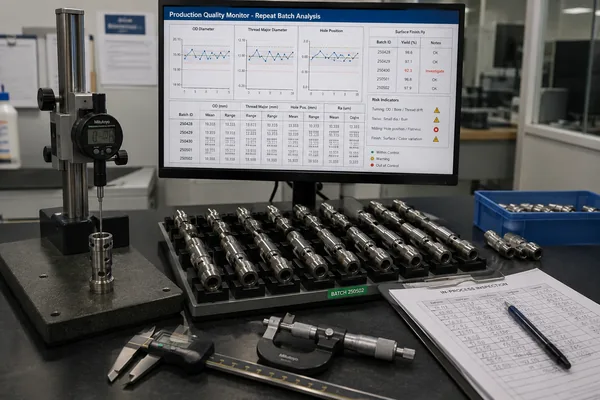
Prototype Passes, but Production Quality Drifts Across Repeat Batches
Prototype Approval ≠ Automatic Production Repeatability. Tool wear, fixture condition, material lots, and deburring variations can cause drift.
A Perfect Part From the Wrong Revision Is Still the Wrong Part
Making the part right starts with making the right revision. Mismatches between PDF drawings, 3D CAD models, and production programs cause immediate assembly failure.
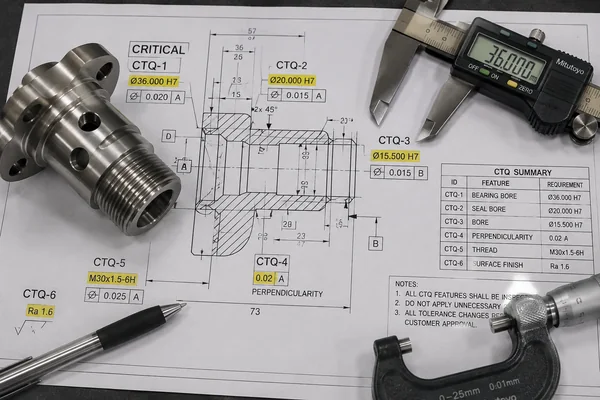
Tight Tolerance Everywhere Does Not Mean Better Functional Control
Applying unnecessarily tight tolerances across every dimension increases machine time, setup control, inspection, and cost without improving final function.
- Identify true Critical-to-Quality (CTQ) features (e.g., bearing bores, sealing faces).
- Separate functional tolerances from clearance dimensions.
- Note: Any tolerance change requires customer approval.
CAD Geometry Does Not Equal Manufacturing Difficulty
A good CNC factory should review manufacturability before cutting metal. Simple models can hide hidden risks.
Deep Narrow Pocket
Risk: Tool deflection and chatter.
Review: Increase radius or reduce depth where design allows.
Tall Thin Wall
Risk: Distortion and vibration during machining.
Review: Optimize tool paths and workholding.
Sharp Internal Corner
Risk: Cutter radius limitation.
Review: Add radius or evaluate EDM.
All design suggestions are subject to customer approval.
Inspect the Interface—not Just the Isolated Feature
Gauge PASS ≠ Functional Interface PASS. A feature can be the right size but in the wrong place.
THREAD
Gauge: PASS
But effective length or shoulder position may fail.
HOLE
Diameter: PASS
But position relative to the mounting datum may fail.
GROOVE
Width: PASS
But axial position for the retaining ring may fail.
PORT
Diameter: PASS
But internal burr at the intersection may fail flow.
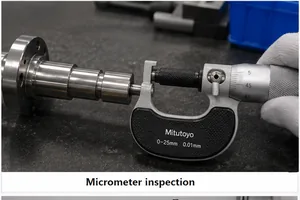
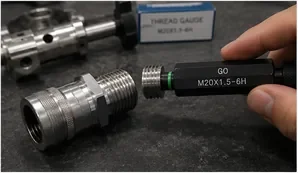
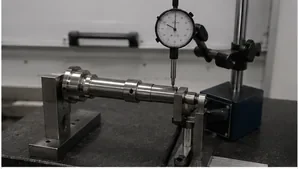
Inspection Method Should Follow Feature Function
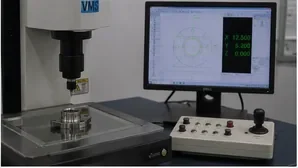
Measurement Exists ≠ Functional Verification Exists. You cannot verify runout simply by measuring two diameters.
- OD: Micrometer
- ID / Bore: Bore Gauge / Pin Gauge where suitable
- Thread: Thread Gauge
- Runout: Dial Indicator
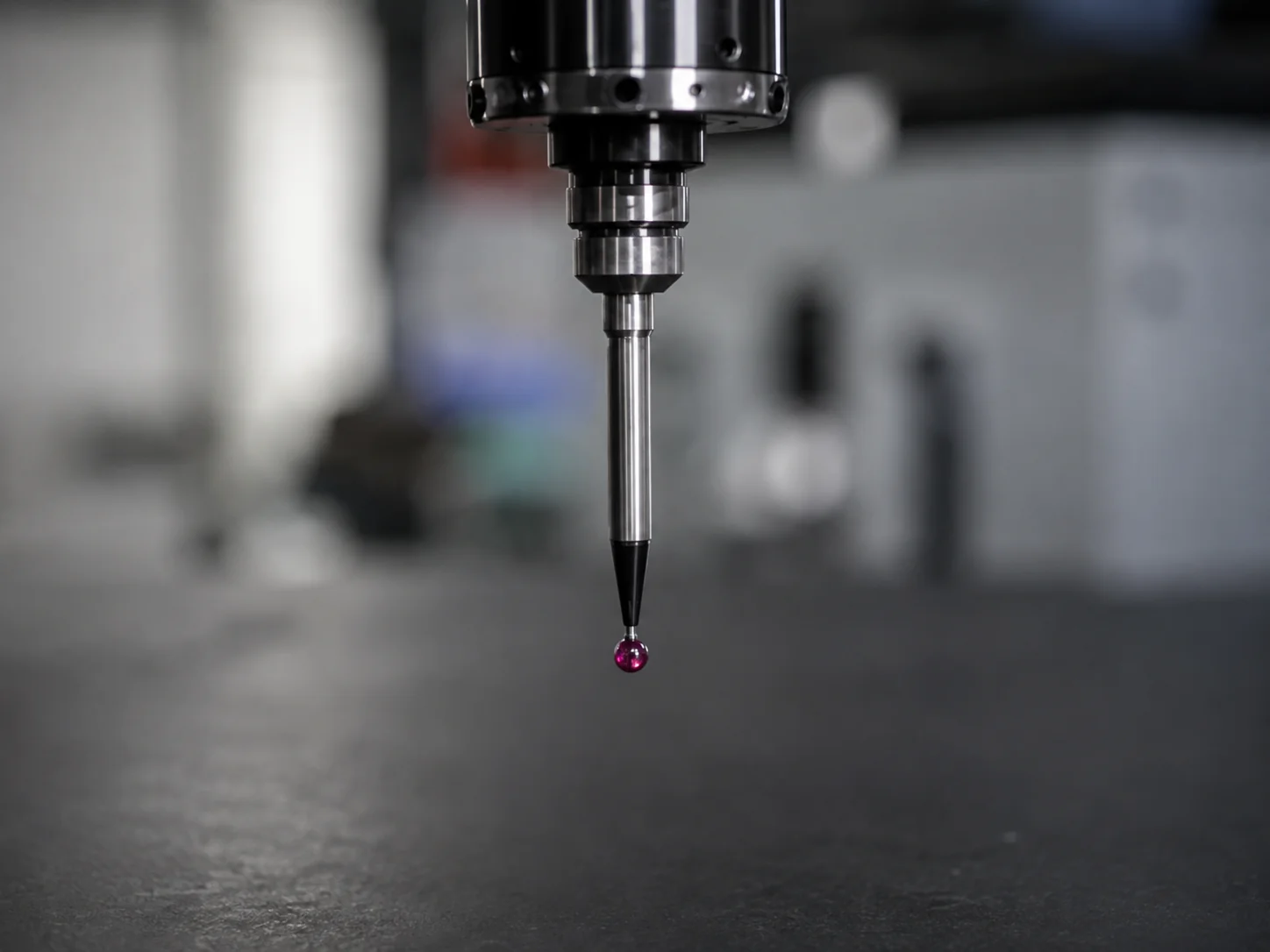
- Hole Position / Multi-Datum: CMM where appropriate
- Small Burr: Optical / Magnified Inspection
From First Article to Repeat CNC Production
A factory should be able to reproduce an approved requirement—not only make one attractive sample.
Custom CNC Components for Precision Assemblies
Robotics & Automation
Concern: Datum / Repeatability
Motors & Motion Systems
Concern: Runout / Bore
Fluid-Control Equipment
Concern: Port / Burr / Surface
Sensors & Instruments
Concern: Alignment / Interface
A CNC Manufacturing Partner You Can Verify
Certificates & Compliance Documents
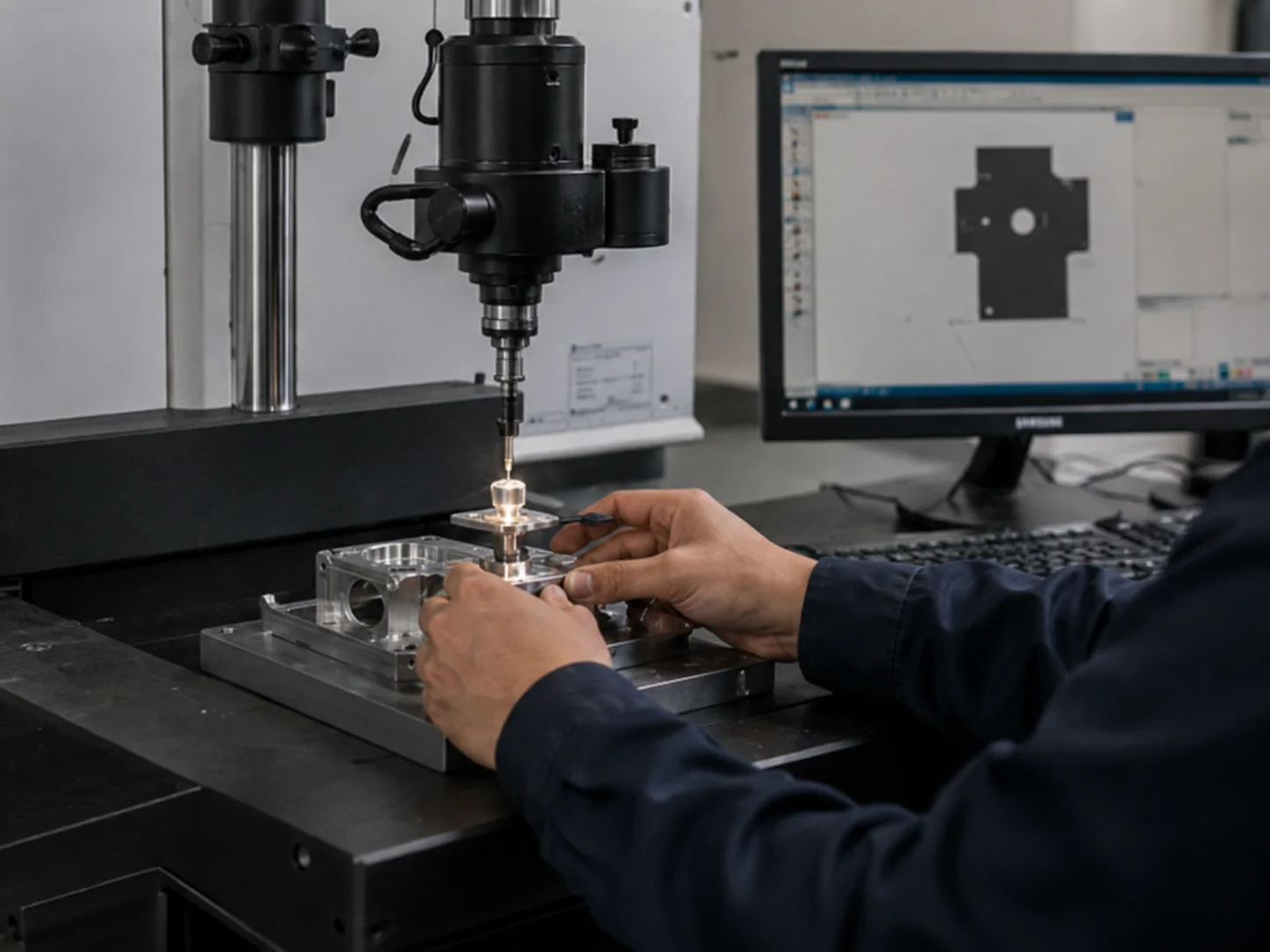
See How LuckyHxs CNC Parts Are Machined and Inspected
What Are CNC Machining Services? Processes, Parts & Applications
CNC machining services convert customer drawings or CAD models into custom metal or engineering-plastic parts by removing material with computer-controlled machine tools.
A "CNC machining service" is not a single machine. It includes CNC Turning, CNC Milling, Swiss Machining, Turn-Mill Machining, Multi-Axis Machining, Drilling, Boring, Threading, and Wire EDM where required.
Process Matching Logic
- CNC Turning: Best for round/rotational geometry. Typical parts: Shafts, Bushings, Fittings.
- CNC Milling: Best for prismatic/pocketed geometry. Typical parts: Housings, Brackets, Plates.
- Swiss Machining: Best for small/slender parts. Typical parts: Small Shafts, Pins, Connectors.
- Turn-Mill: Best for round parts with off-axis features. Typical parts: Cross-Hole Shafts, Ported Sleeves.
- Multi-Axis: Best for complex multi-surface geometry.
A capable supplier should choose the machining route around the drawing rather than forcing every part into the same process. The right CNC process starts with the geometry—not the machine name.
How Much Does CNC Machining Cost? 8 Factors Behind Your Quote
There is no universal price for a custom CNC-machined part. A drawing-based quote depends on the manufacturing effort required to produce and verify the specific component.
Estimated CNC Project Cost =
Material + Programming & Setup + Machine Time + Tooling/Fixture + Secondary Operations + Inspection + Finishing + Packaging/Logistics
How to Reduce CNC Cost Without Damaging Function
- Use tight tolerances only where functional.
- Use standard material grades where suitable.
- Avoid unnecessary deep pockets and sharp internal corners.
- Reduce setup count where geometry allows.
- Confirm realistic surface finish requirements.
- Provide prototype + expected production quantity.
Cost reduction should remove unnecessary manufacturing effort—not remove functional requirements. Hourly machine rate alone does not determine project cost.
How to Estimate CNC Machining Cost & Time From a Drawing
An accurate CNC estimate starts with the drawing—not an hourly machine rate. Incomplete RFQ information creates more quoting uncertainty than most buyers realize.
Buyer RFQ Checklist
- Latest 2D Drawing (PDF)
- 3D CAD Where Available
- Material & Grade
- Prototype & Expected Prod. Quantity
- Critical Tolerances / GD&T
- Threads & Fits
- Surface Finish & Post-Processing
- Inspection Requirements
- Target Delivery Date
What Makes Machining Time Longer?
- Deep Pockets / Deep Bores
- Thin Walls requiring slow feeds
- Multiple Setups
- Tight Tolerances everywhere
- Complex Surfaces / Hard Materials
- Heavy Inspection requirements
CNC Machining Service Factory FAQ
What are CNC machining services?
What parts can a CNC machining factory make?
What is the difference between CNC milling and CNC turning?
When should a part use Swiss machining?
When should a part use turn-mill machining?
How much does CNC machining cost?
What is the typical CNC machining cost per hour?
How can I reduce CNC machining cost?
What tolerances can LuckyHxs support?
What should I send for a CNC machining quote?
Need a CNC Factory to Review the Part Before Choosing the Process?
Send your latest 2D/3D drawing, material, prototype and production quantity, critical tolerances, functional datums, threads, fits, surface finish, inspection requirements and target schedule. LuckyHxs will review the geometry and determine whether CNC turning, milling, Swiss, turn-mill or another suitable machining route should be evaluated before quotation.
Direct Contact
Email: admin1@lucky-hxs.com
Phone: +86 13342931453
Address: Shenzhen Bao'an Songgang
Chat on WhatsApp