Stainless Steel Parts Manufacturer for Custom CNC Components
For buyers comparing stainless steel parts manufacturers, LuckyHxs focuses on drawing-based CNC components rather than standard off-the-shelf hardware. We manufacture custom stainless steel shafts, fittings, bushings, valve components, threaded parts, and housings. CNC turning, milling, Swiss, and turn-mill processes are selected according to geometry, grade, and production requirements.
- Made to Your Drawing
- 303 / 304 / 316 / 316L / 416
- Turning, Milling & Swiss Support
- Prototype to Repeat Production
Custom Stainless Steel Parts at a Glance
Supply Type
Made-to-Drawing Stainless Steel Components
Processes
CNC Turning / Milling / Swiss / Turn-Mill
Common Grades
303 / 304 / 316 / 316L / 416
Typical Parts
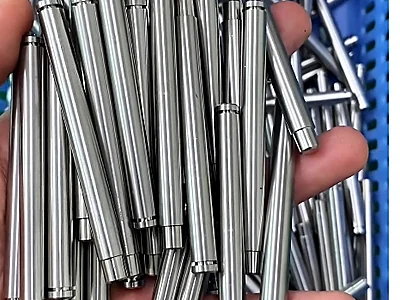
Shafts / Pins / Bushings / Sleeves / Fittings / Valves / Housings
Critical Features
ID / OD / Thread / Runout / Concentricity / Burr
Tolerance Reference
Standard ±0.01 mm*
*Feature-specific capability depends on geometry, stainless grade, machining process and inspection requirements.
Drawing Formats
PDF / STEP / STP / IGES / DWG / DXF
Logistics
MOQ & Lead Time: [CONFIRM per project]
Looking for finished CNC parts rather than raw stainless steel?
LuckyHxs manufactures components strictly to your engineering drawings. We do not sell standard off-the-shelf hardware or raw sheet metal.
 Send Your CAD File
What Does a Stainless Steel Parts Manufacturer Actually Make?
Understanding the difference between a raw steel producer and a custom parts manufacturer ensures you send your drawings to the right facility.
Raw Steel Producer
Not LuckyHxs's core business. We do not manufacture or distribute bulk raw materials.
- Stainless Steel Sheet
- Stainless Steel Coil
- Raw Steel Bar Stock
- Steel Plate
- Steel Billets
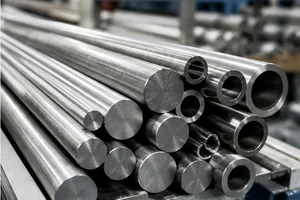
LuckyHxs Scope
We machine finished parts from customer drawings. We transform raw bar stock into precision functional components.
- Custom Shafts & Pins
- Precision Fittings & Adapters
- Valve Components
- Custom Sleeves & Bushings
- Threaded Parts & Housings
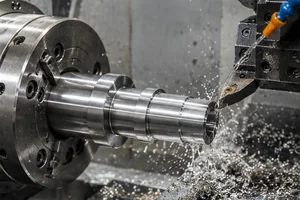
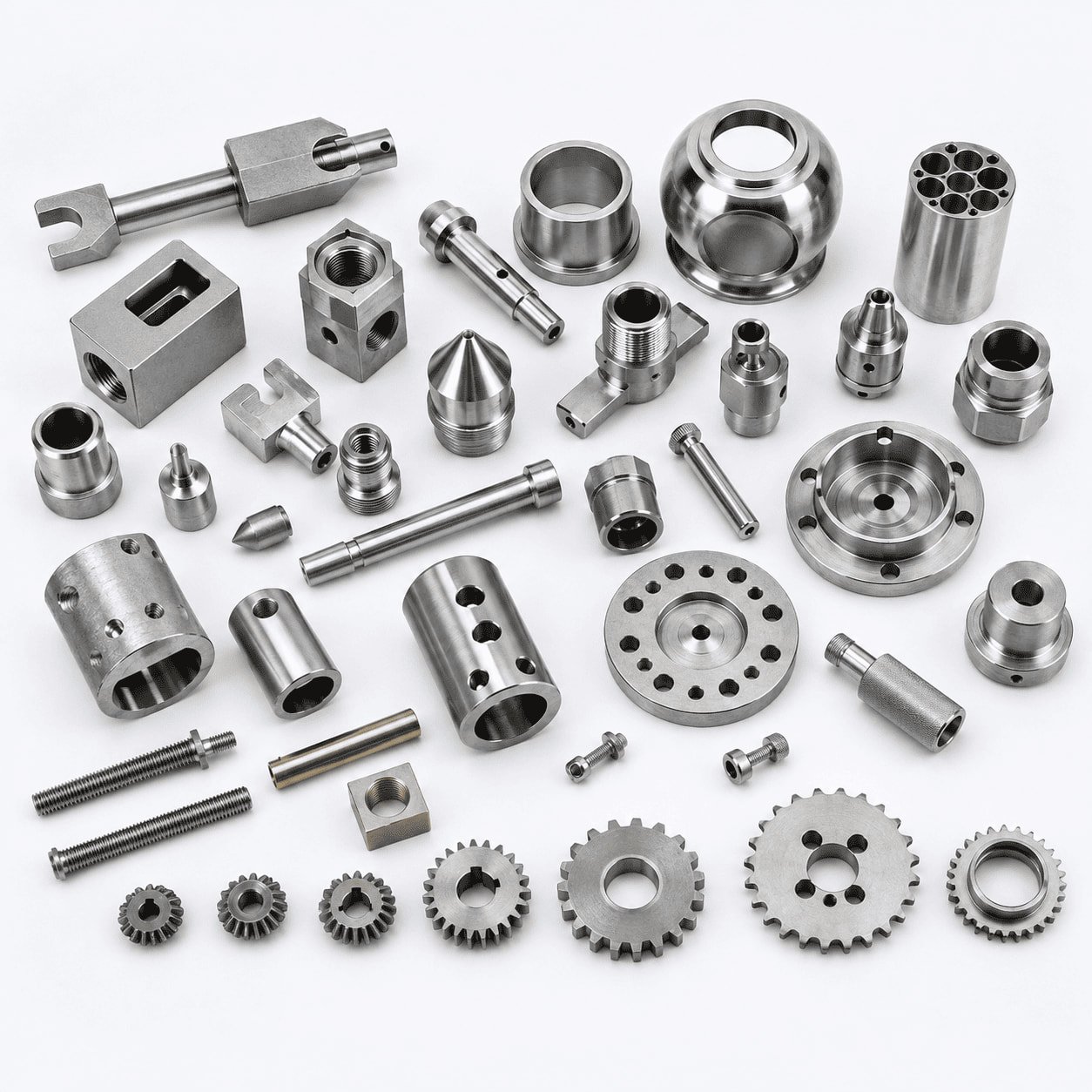
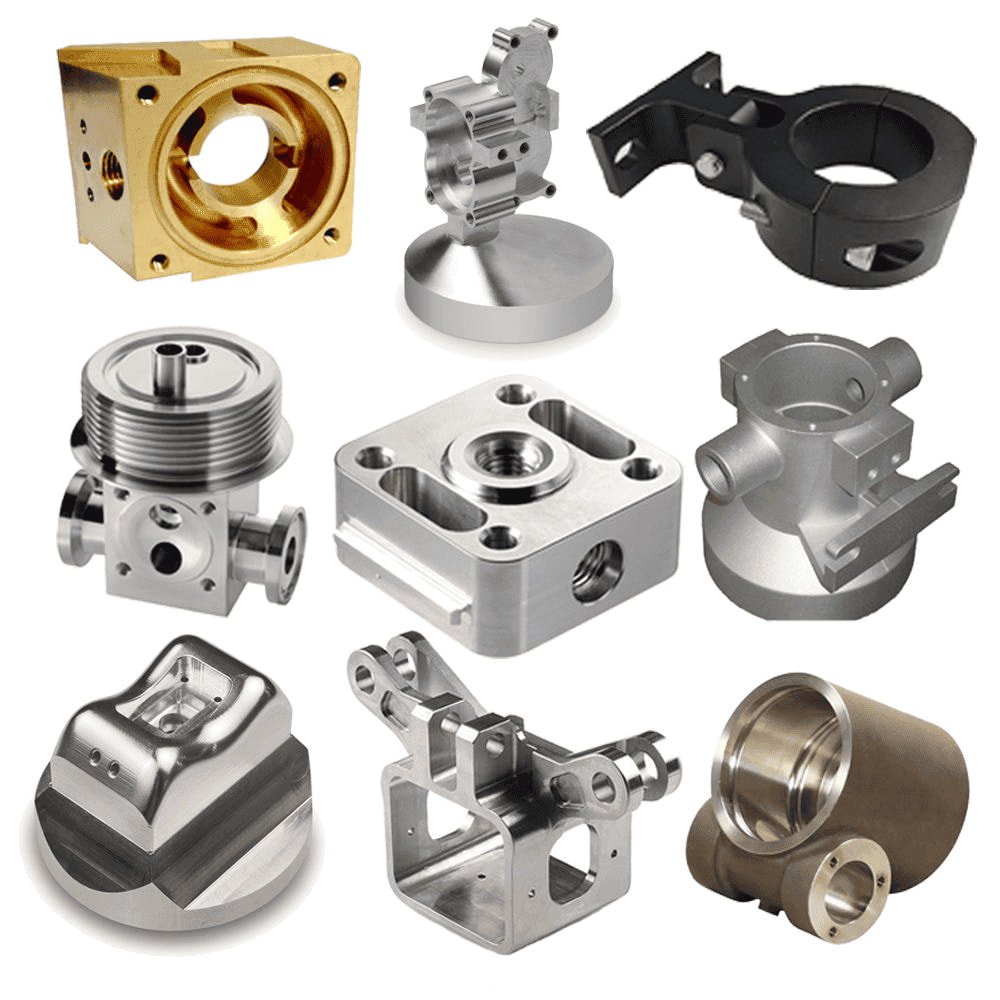
Custom Stainless Steel Parts We Machine to Your Drawings
Categorized by part type, functional geometry, and final application.
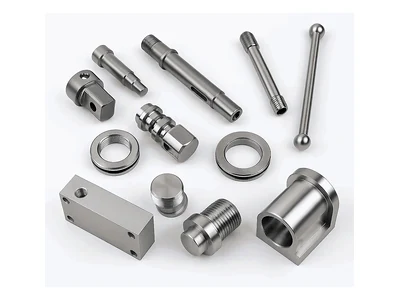
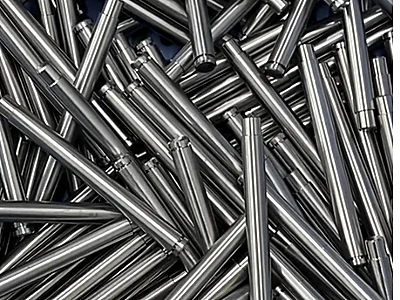
Stainless Steel Shafts, Pins & Precision Turned Parts
A shaft can meet its individual diameter requirements and still fail in the assembly if runout, concentricity or shoulder relationships are not controlled from the functional datum.
Small Diameter, Multiple Steps, Shoulder, Groove, Thread, Cross Hole.
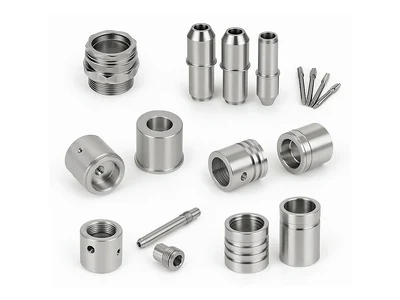
Stainless Steel Bushings, Sleeves & Spacers
ID PASS + OD PASS does not automatically mean Assembly PASS. We check functional fit, concentricity, free-state roundness, and end-face relationships.
Bore-to-OD Concentricity, Roundness, Length, End Face, Fit, Thin Wall.
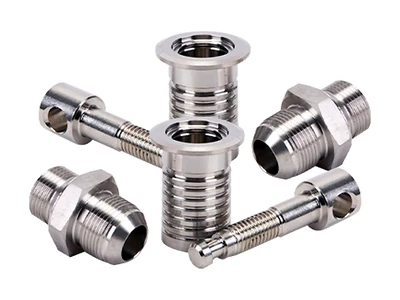
Stainless Steel Fittings, Adapters & Connectors
Custom drawing-based fittings, not standard plumbing retail. We focus on thread fit, concentricity, sealing geometry, and burr control.
Internal/External Thread, Hex, Bore, Shoulder, Sealing Face.
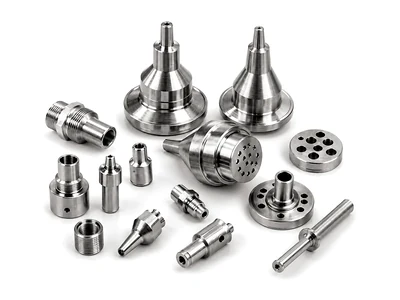
Stainless Steel Valve Bodies, Nozzles & Fluid Control
Success requires Hole Size + Burr Removal + Chip Removal + Functional Surface. Pressure rating subject to specific project requirements.
Precision Bore, Small Hole, Deep Hole, Internal Thread, Sealing Surface.
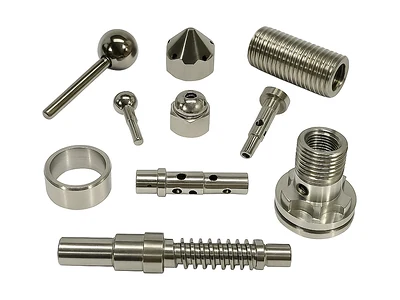
Stainless Steel Fasteners, Inserts & Custom Threaded Parts
Custom, non-standard, drawing-based fasteners. We monitor thread gauge, thread entry, concentricity, and galling risk.
Special Head, Shoulder, Precision Thread, Small Bore, Groove.
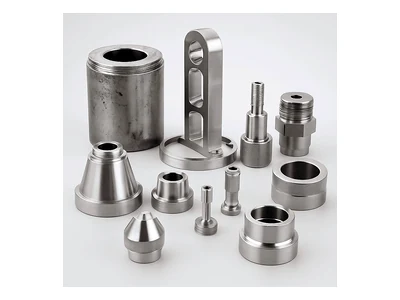
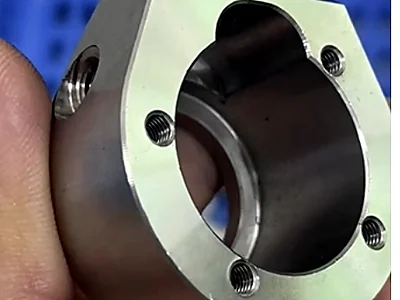
Stainless Steel Housings, Enclosures & Sensor Bodies
Precision CNC milled enclosures. We manage hole position, flatness, wall distortion, burrs, and surface cleanliness.
Pockets, Counterbores, Mounting Holes, Multi-Face Features, Thin Walls.
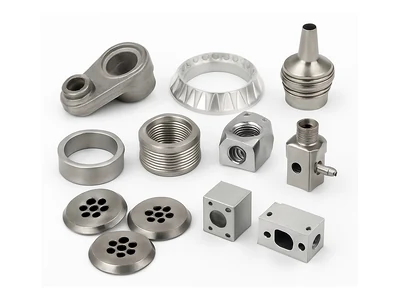
Stainless Steel Brackets, Mounts & Structural Components
Machined mounting blocks and brackets. Multi-face machining focused on parallelism, perpendicularity, and datum relationships.
Hole Position, Mounting Pattern, Threaded Holes, Pockets.
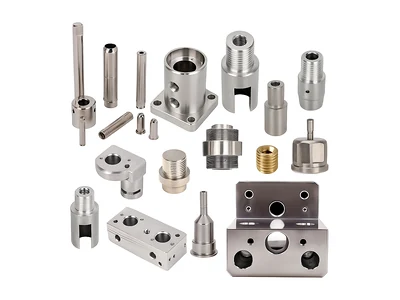
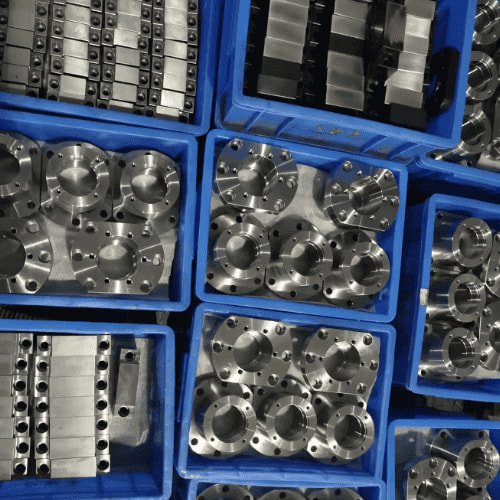
Stainless Steel Flanges, Manifolds & Custom Milled Parts
Precision flanges and distribution blocks. Attention to face milling, hole patterns, cross holes, and threaded ports.
Face Milling, Hole Pattern, Cross Hole, Threaded Port, Datum Face.
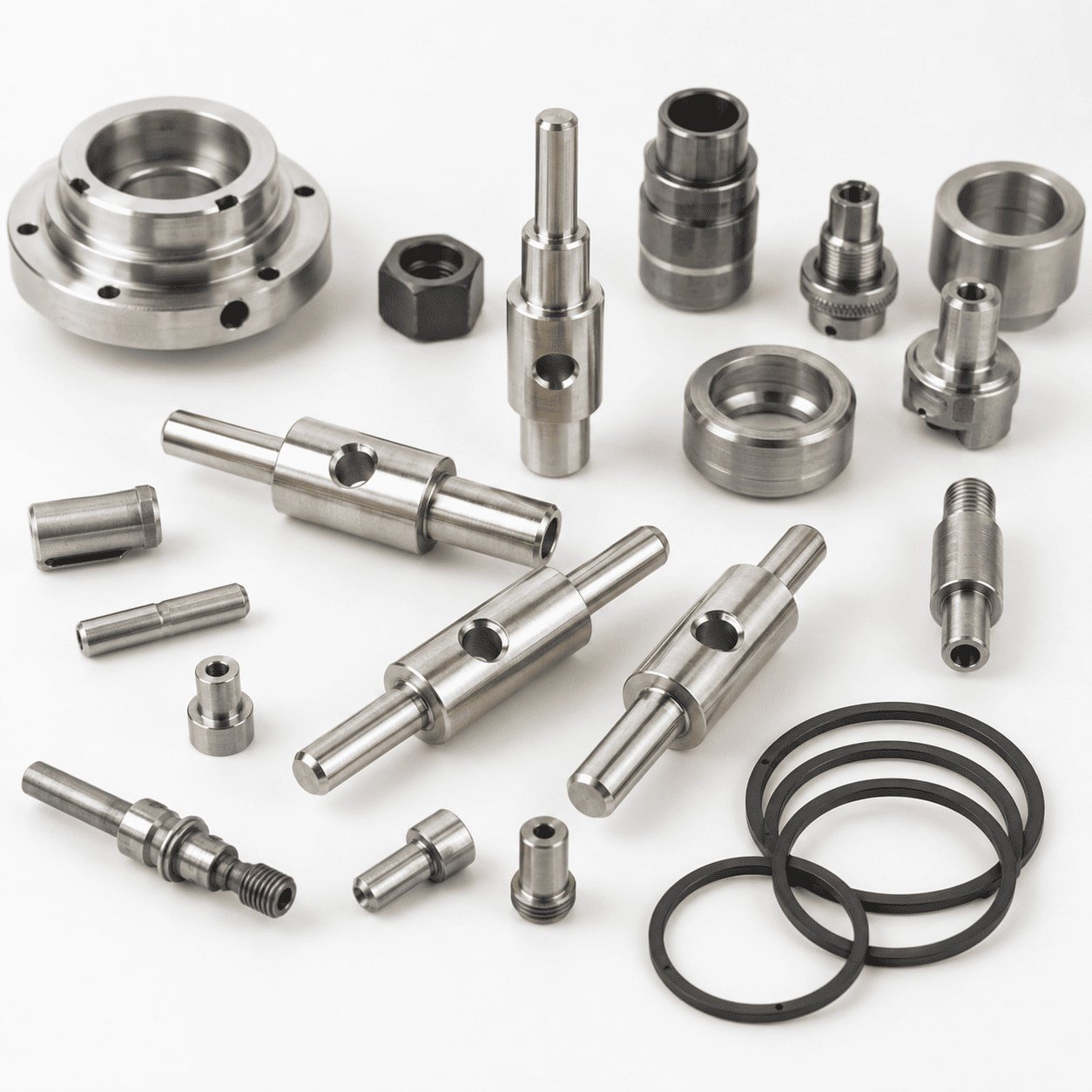
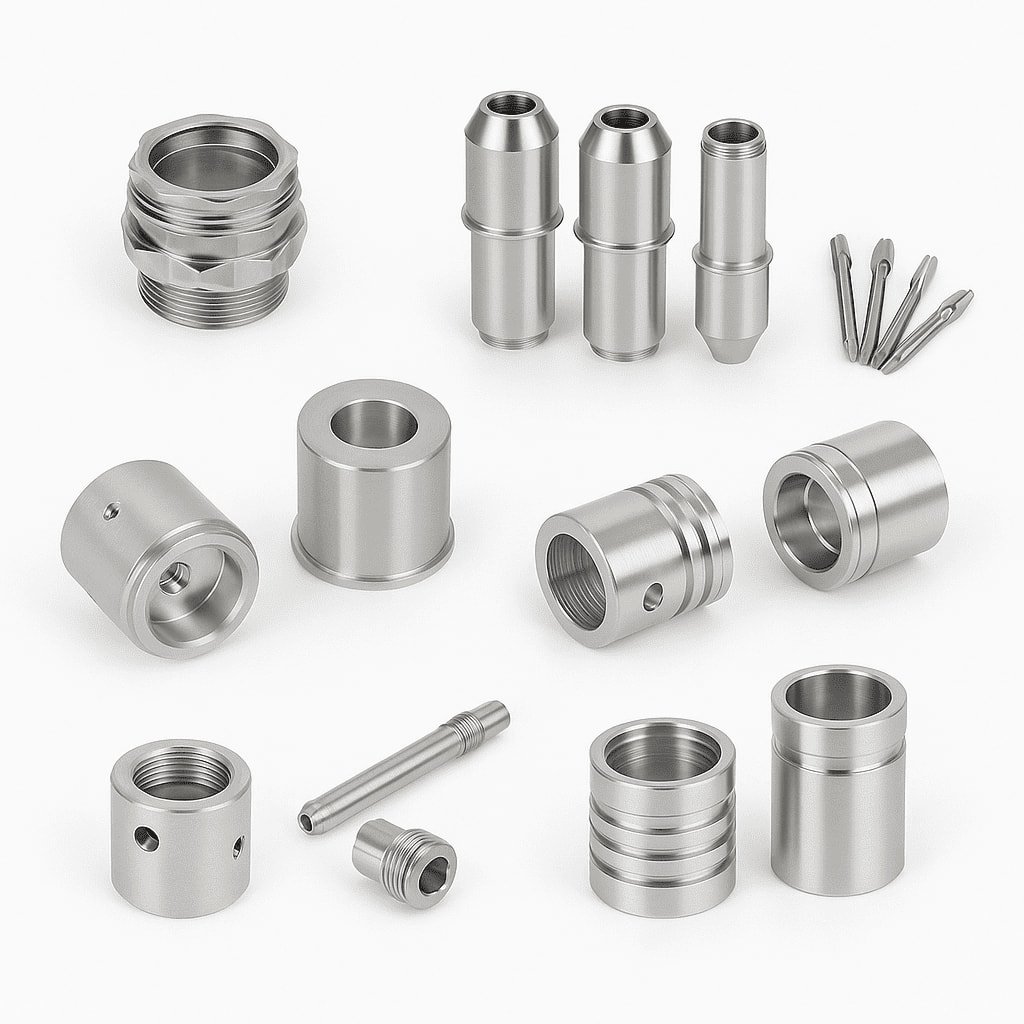
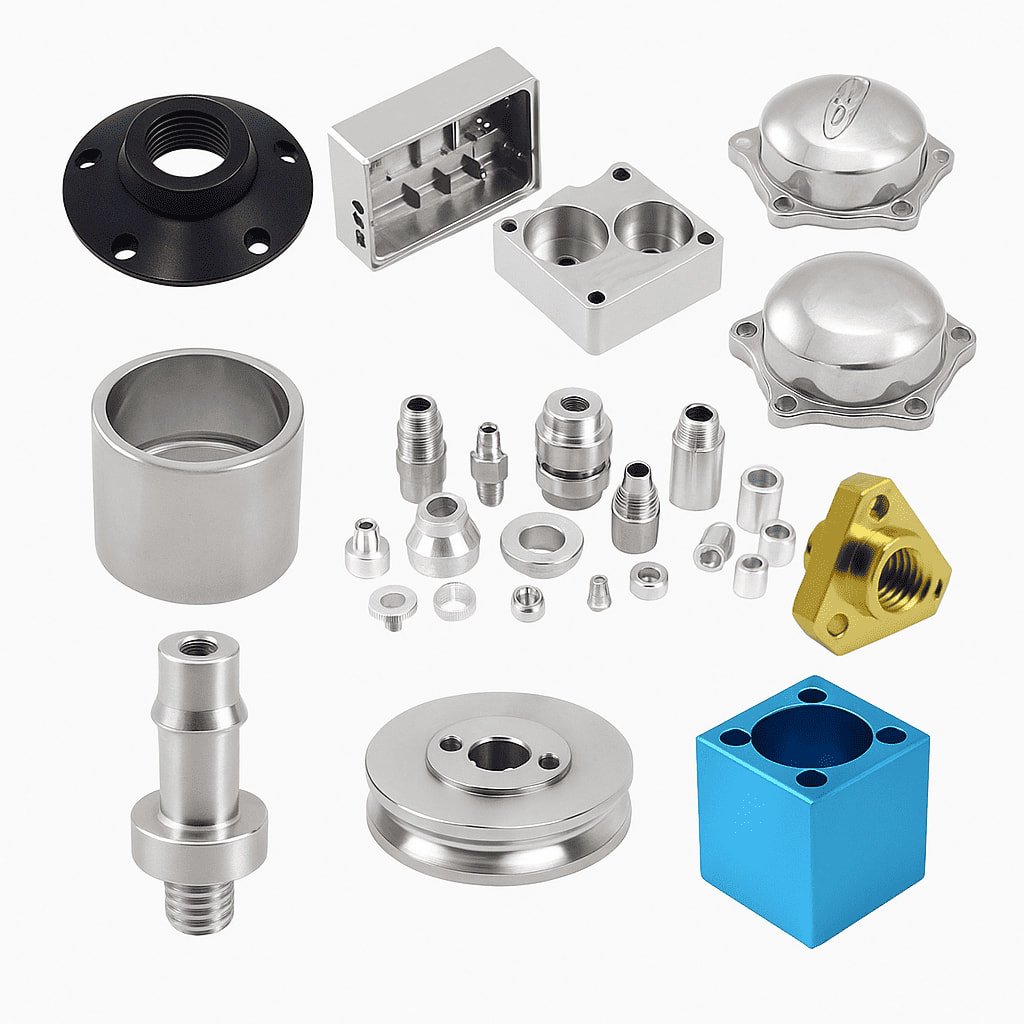
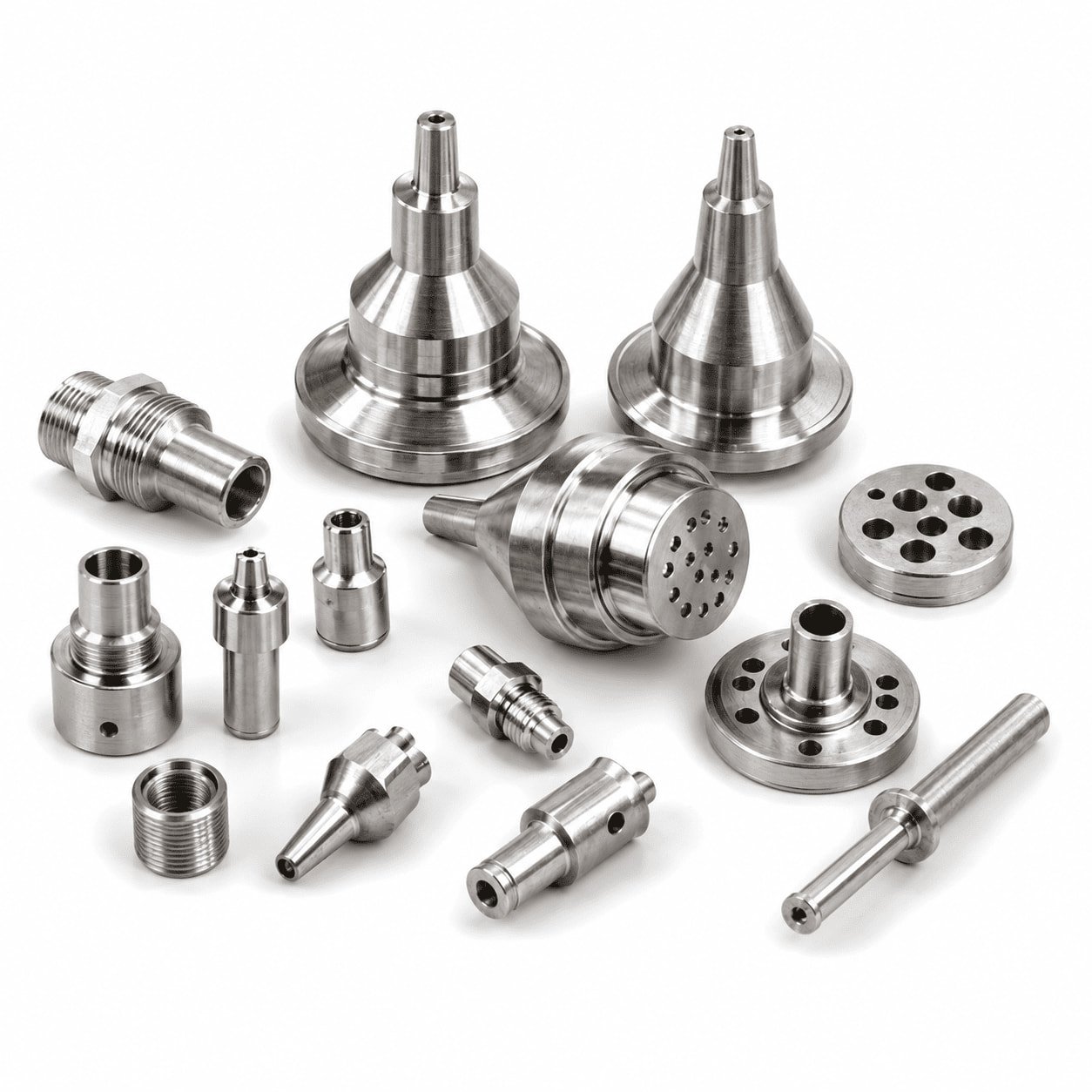
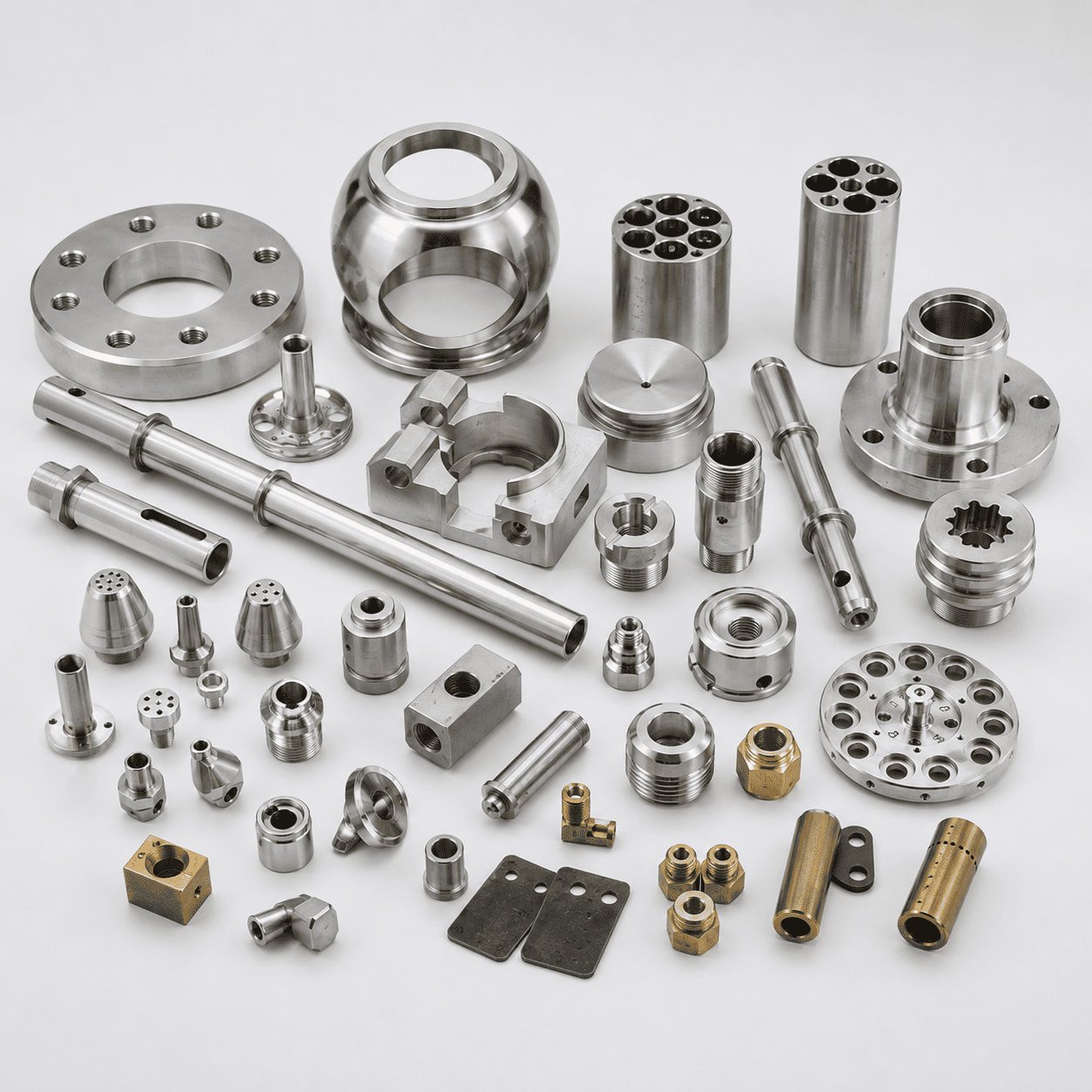
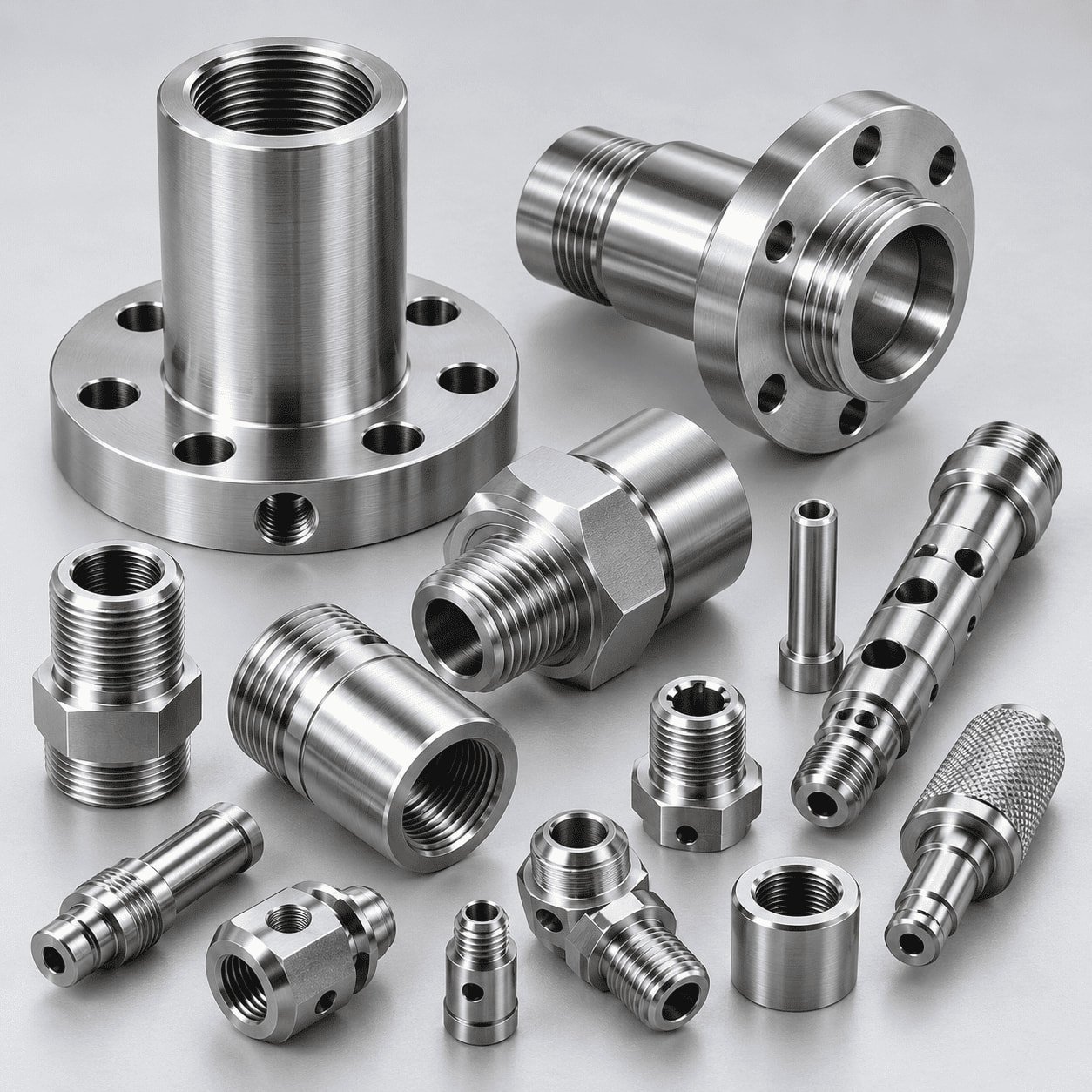
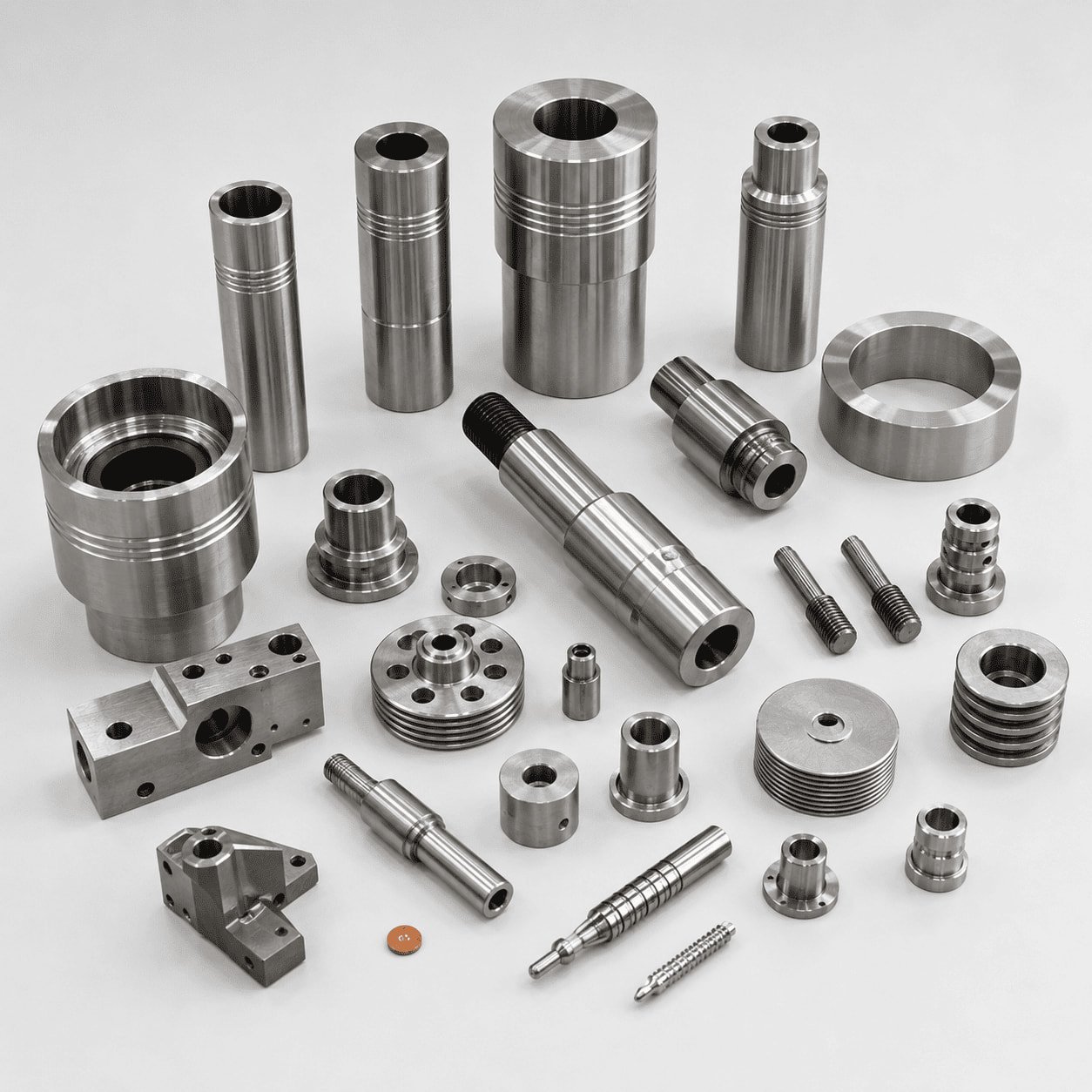
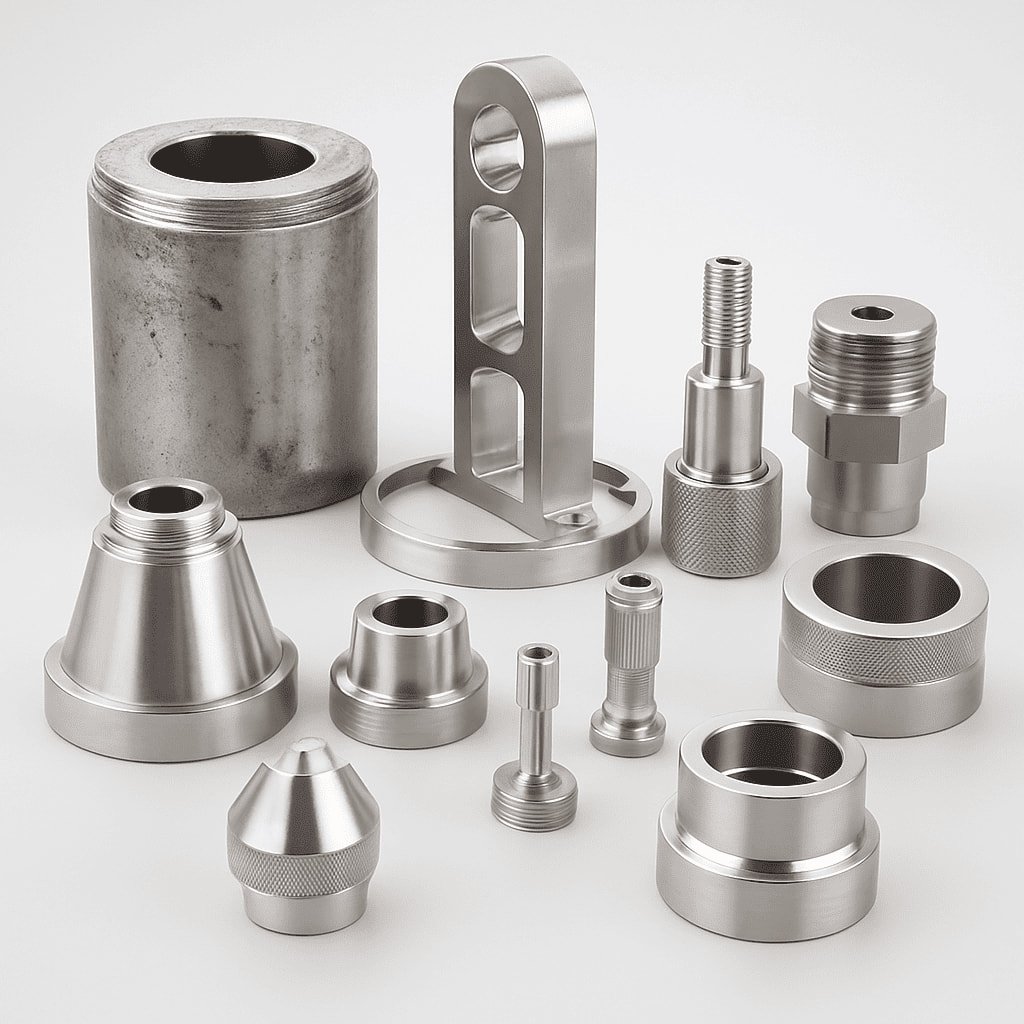
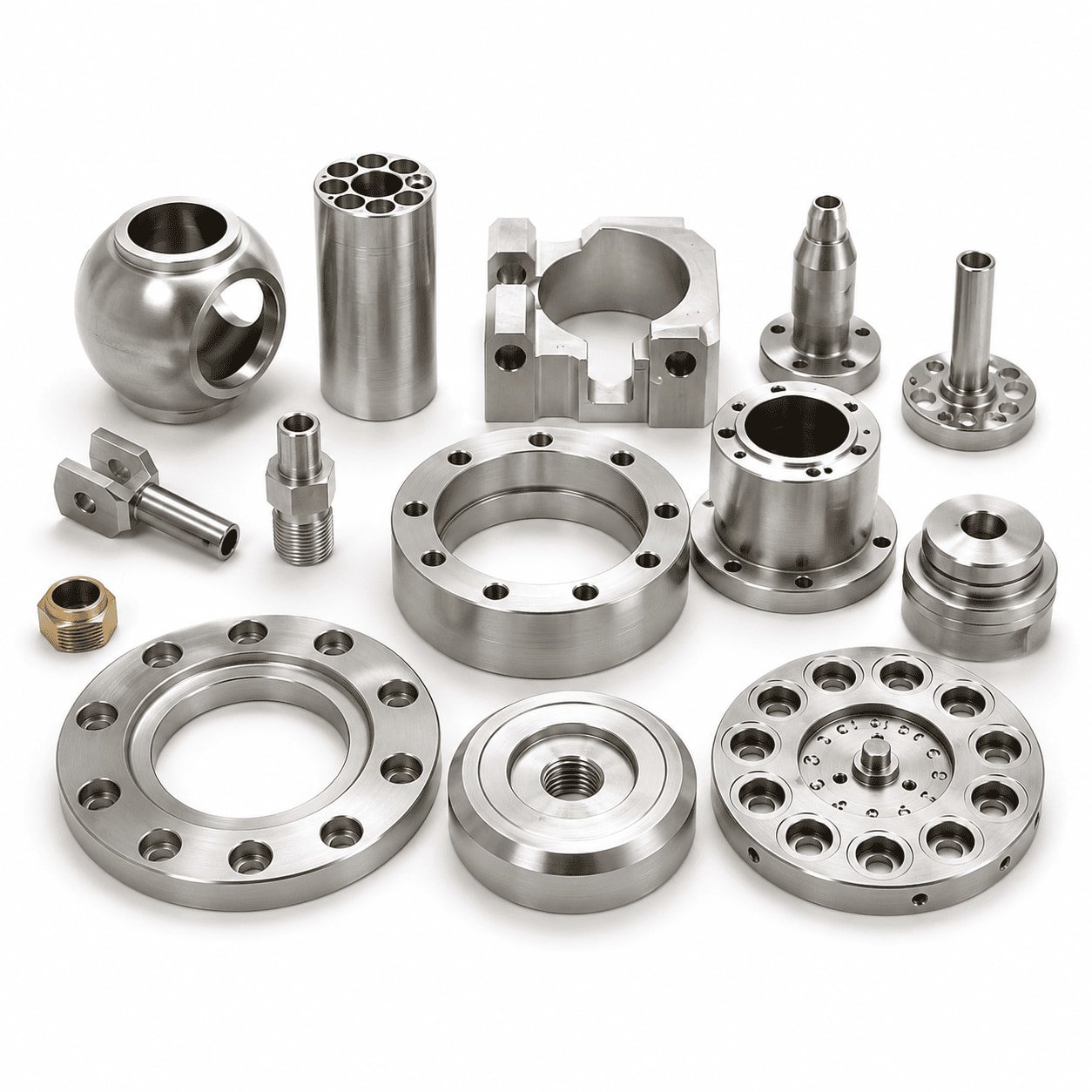
CNC Machined Stainless Steel Parts for Custom Assemblies
Start with the Stainless Steel Grade, Not Just "Stainless"
Different grades have distinct machining characteristics and corrosion resistance profiles.
303
Machinability-Focused
Use when machinability is a major priority and the service environment allows the selected grade.
- Typical Parts: Precision Turning, Shafts, Pins, Fittings.
- Watch Point: Do not select 303 only because it machines easily. Corrosion requirement must be reviewed.
304
General-Purpose
A common general-purpose option for many industrial CNC components.
- Typical Parts: Housings, Brackets, Sleeves, Industrial Components.
- Watch Point: Susceptible to work hardening, tool wear, and machining heat.
316 / 316L
Higher Corrosion Resistance
Consider where the service environment requires stronger corrosion performance.
- Typical Parts: Valve Components, Equipment Parts, Precision Components.
- Watch Point: Higher corrosion requirement can also change machining difficulty and cost.
416
Machinability/Strength
Consider for suitable projects where machinability and mechanical requirements align.
- Typical Parts: Shafts, Pins, Threaded Components.
- Watch Point: Corrosion performance must be evaluated against the real service environment.
Choose Stainless Steel Around the Real Application
Material should be selected around function—not simply by which grade is easiest to machine.
Prioritize Machinability
When rapid material removal and fine finishes are critical, and corrosion risk is low.
General Industrial Use
Standard structural and housing applications balancing cost and moderate corrosion resistance.
Higher Corrosion Requirement
Exposure to chlorides, chemicals, or harsh environments dictating specific alloy additions.
Threaded / Turned Geometry
Complex threads and small turned features require grades that yield clean chips without severe galling.
Thin-Wall Geometry
Materials that minimize internal stress release and distortion during heavy machining.
Surface / Cleaning Requirement
Applications requiring specific passivation, polishing, or stringent cleanliness standards.
Why Stainless Steel Parts Fail Even When the Drawing Looks Simple
1. Wrong Stainless Steel Grade
Affected: Performance or Cost
Material mismatch leads to corrosion failure or unnecessary machining expenses.
2. Work Hardening & Tool Wear
Affected: Dimensional Drift
Surface hardens during cutting, destroying tools and shifting critical dimensions.
3. Sample-to-Batch Drift
Affected: Fit & Surface Quality
Prototype passes, but batch dimensions, threads and surface quality drift over time.
4. Heat Build-Up
Damages surface finish and dimensional stability during machining.
5. Stringy Chips & Built-Up Edge
Scratches and damages critical sealing or bearing surfaces.
6. Burrs in Small Holes
Chips remain in small holes & cross features, causing fluid blockage.
7. Thread Seizing
Threads pass dimensions but still seize or assemble poorly (galling).
8. Axis Misalignment
ID, OD, Threads and Shoulders do not share the same functional axis.
9. Thin-Wall Distortion
Parts distort after unclamping from the machine fixture.
10. Surface Contamination
Free iron contamination makes stainless parts develop rust spots.
Wrong Stainless Grade Compromises Performance
The Challenge: Customer drawings often just state "Stainless Steel". However, 303, 304, 316, and 416 cannot be treated as interchangeable. We must identify the exact grade, corrosion environment, strength, machinability, and compliance requirement.
Customer Consequence: Wrong corrosion performance, higher machining cost, material documentation mismatch, or prototype/production material differences.
LuckyHxs Approach: Review exact grade and operating environment. Identify corrosion requirements and machining difficulty. Confirm material before production. Do not substitute grades without approval. Control material specifications for repeat orders.
- ✓ Material Callout
- ✓ Drawing Revision
- ✓ Material Documentation
- ✓ Operating Environment
- ✓ Critical Function
Work Hardening & Burrs Damage Critical Features
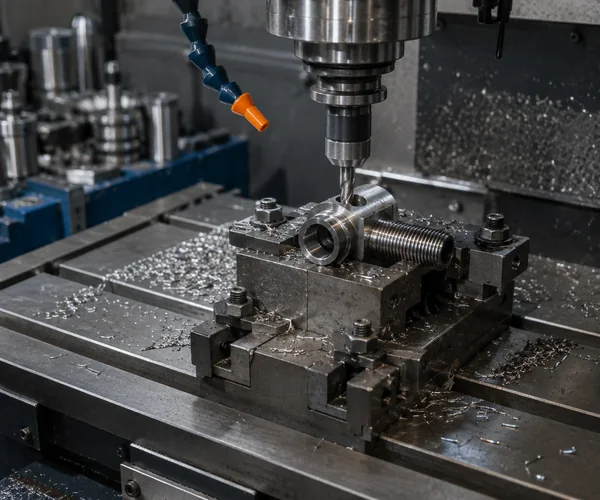
The Challenge: Stainless steel machining risks include tool wear, work hardening, heat build-up, built-up edge, and burrs. This severely impacts small holes, cross holes, grooves, internal bores, threads, and sealing surfaces.
Why It Happens: Material behavior, tool condition, cutting strategy, heat, chip evacuation, and repeated tool contact on small feature geometry.
LuckyHxs Approach: Select process according to grade and geometry. Monitor tool condition and manage chip evacuation. Inspect thread entries/exits, deburr functional edges, and protect finished surfaces.
- ✓ Small Holes & Bores
- ✓ Thread Quality
- ✓ Groove Dimensions
- ✓ Burr Removal
- ✓ Surface Finish
Sample-to-Batch Fit & Surface Quality Drifts
The Challenge: The prototype passes with correct OD, threads, and clean surfaces. But in production, OD/ID drifts, thread fit changes, burrs increase, concentricity changes, and handling marks appear. Prototype Passed → Production Batch Changed.
Why It Happens: Tool wear, material lot variations, work hardening, cutting heat, fixture changes, deburring variation, and drawing revision gaps.
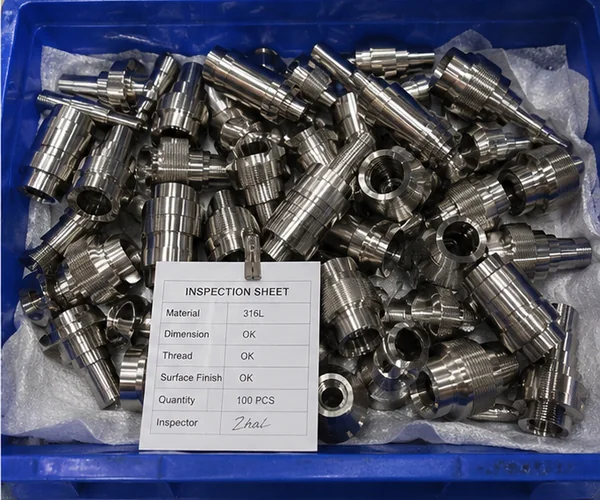
LuckyHxs Approach: First article verification, critical feature identification, in-process inspection, tool condition monitoring, thread/burr review, final batch verification, and repeat-order requirement retention.
- ✓ Runout & Concentricity
- ✓ Thread Consistency
- ✓ Batch Dimensions
- ✓ Surface Uniformity
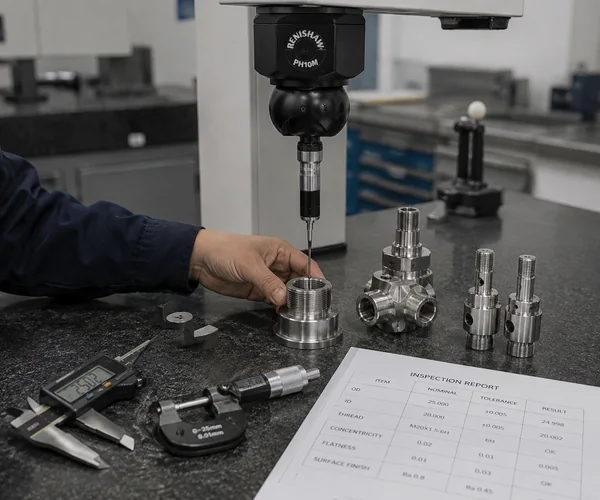
Individual Dimensions Can Pass While the Assembly Still Fails
An OD can pass, an ID can pass, and a thread can pass. But if concentricity fails, the result is runout, misalignment, uneven seals, and poor assembly.
We inspect the relationship between functional features—not dimensions in isolation. We focus on ID/OD relationships, shoulder positions, thread axes, and sealing surfaces relative to the functional datum.
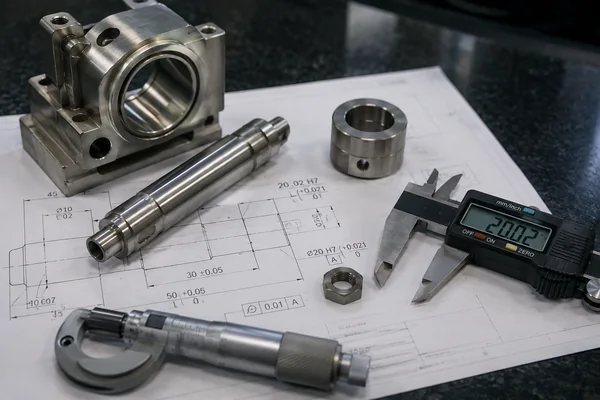
Threads, Small Holes and Burrs Can Decide the Final Assembly
Thread size PASS does not automatically mean the thread will assemble correctly. We inspect functional entry, alignment, and internal cleanliness.
Internal Thread
Risk of galling and poor alignment with bore.
External Thread
Risk of damaged first thread and entry burrs.
Blind Hole
Risk of trapped chips preventing full assembly.
Cross Hole
Internal burrs at the intersection blocking flow.
Small Bore
Rough surface finish from poor chip evacuation.
Groove
Incorrect width or corner radius affecting O-rings.
Thread Exit
Incomplete threads causing assembly bottom-out.
Entry Chamfer
Missing chamfers leading to cross-threading.
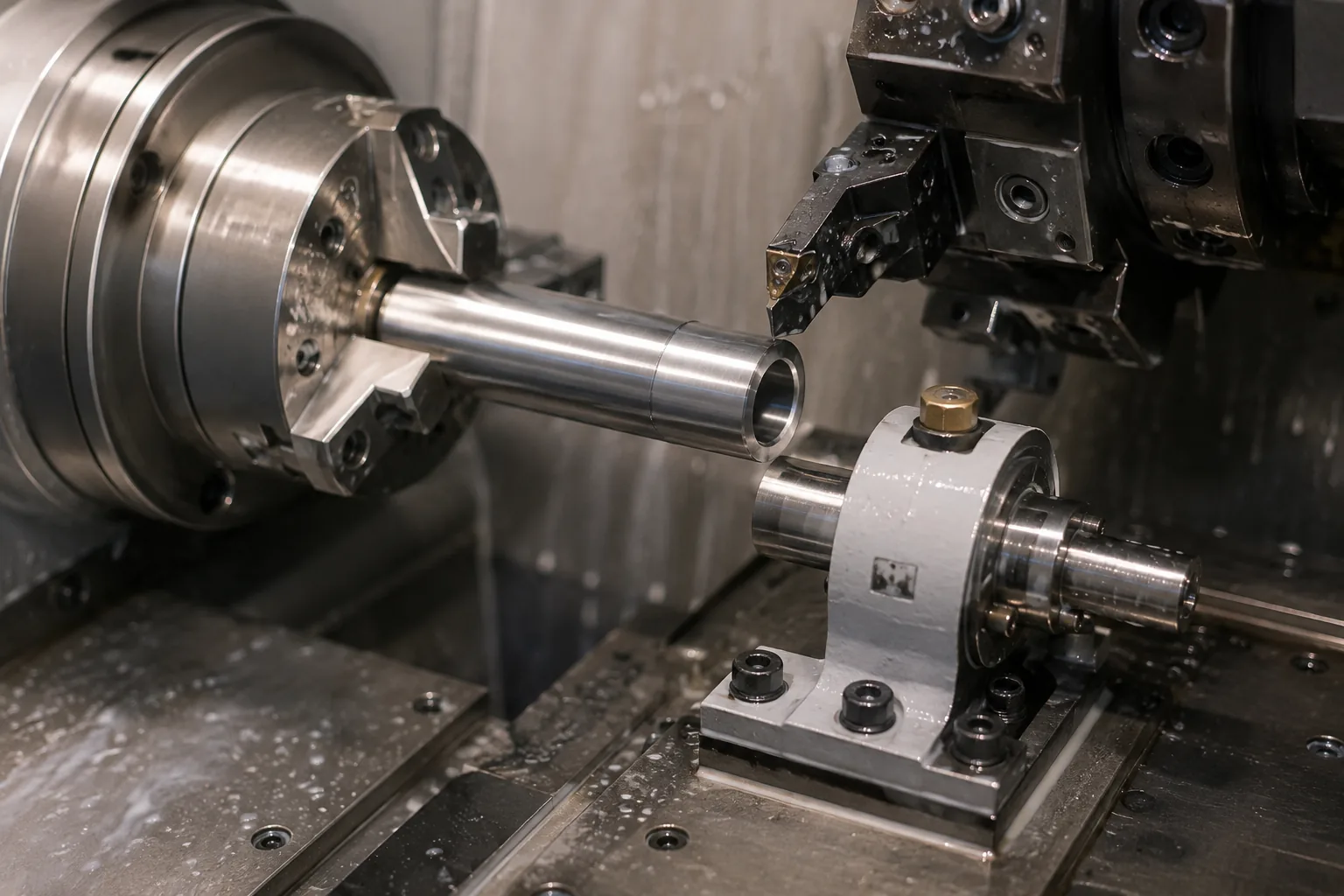
Thin-Wall Stainless Parts Need Controlled Workholding
Clamped Measurement ≠ Free-State Geometry.
For thin sleeves, connector shells, housings, and small flanges, chuck marks, ovality, and wall distortion are major risks. The part may measure perfectly in the machine but spring out of tolerance once unclamped.
- • Review thin-wall geometry before machining
- • Plan clamping positions to minimize stress
- • Reduce unnecessary re-clamping
- • Measure after unclamping (free-state)
- • Inspect roundness/flatness where functional
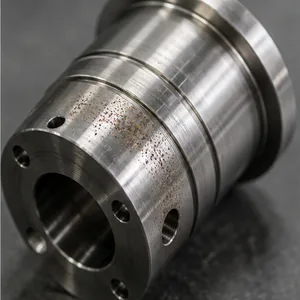
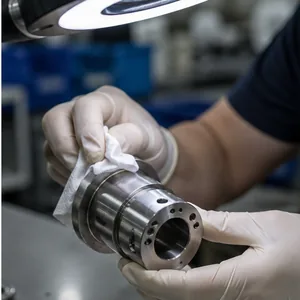
Surface Condition Matters Even on Stainless Steel
Rust spots on a stainless component do not automatically prove that the bulk material is wrong. Machining and handling contamination (free-iron, grinding dust, oils) must also be considered.
Machining → Deburring → Cleaning → Surface Review → Project-Specific Finishing → Final Inspection
Available finishes include As-Machined, Polishing, Brushing, Sandblasting, and Passivation (when specified or required by the application).
CNC Processes for Custom Stainless Steel Parts
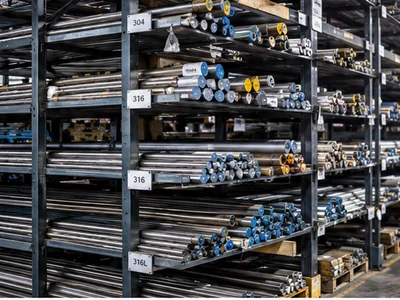
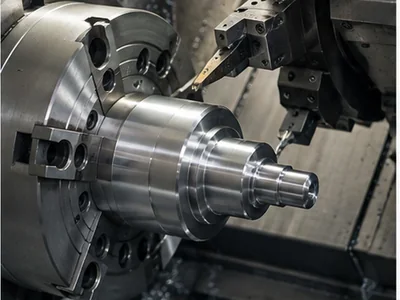
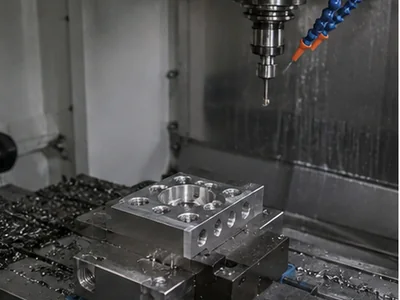
We select the machining route according to geometry, stainless grade, tolerance, quantity, and functional relationships.
From Drawing Review to Repeat Stainless Steel Production
Consistent quality requires a structured process, not just final inspection.
- 1 Drawing Review
- 2 Grade Confirmation
- 3 Critical Feature Identification
- 4 Process Planning
- 5 First Article Verification
- 6 In-Process Inspection
- 7 Thread / Burr / Surface Review
- 8 Final Inspection
- 9 Repeat-Batch Requirement Retention
Note: Inspection focuses on ID, OD, Runout, Concentricity, Thread, Hole, Flatness, Burr, and Surface based on drawing requirements.
Ask for Engineering Review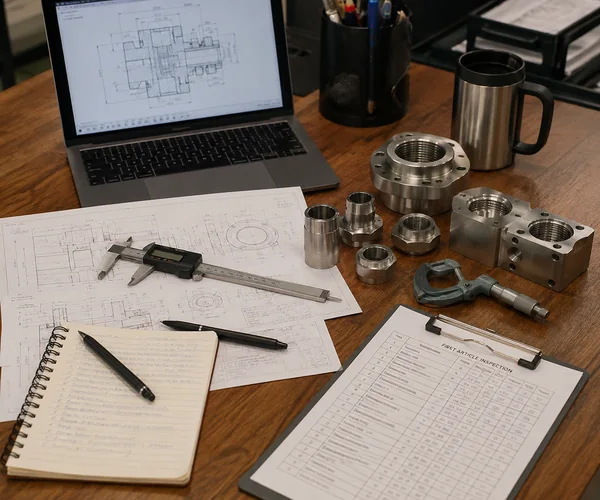
Where Custom Stainless Steel Parts Are Used
Industrial Automation
Typical Part: Guide Shafts
Considered for wear resistance and dimensional stability.
Concern: Runout & Concentricity.
Robotics & Machinery
Typical Part: Precision Pins
Considered for strength and precise locating capability.
Concern: OD Tolerance & Fit.
Automotive & EV Equipment
Typical Part: Custom Fasteners
Considered for environmental resistance in assemblies.
Concern: Thread Quality & Galling.
Fluid Control Equipment
Typical Part: Valve Bodies
Considered for corrosion resistance against fluids.
Concern: Internal Burrs & Sealing.
Electronics & Instruments
Typical Part: Small Housings
Considered for durability and clean appearance.
Concern: Thin-Wall Distortion.
Sensors & Measurement
Typical Part: Sensor Bodies
Considered for protection of internal electronics.
Concern: Small Hole Accuracy.
Energy & Power Equipment
Typical Part: Flanges
Considered for structural integrity in harsh environments.
Concern: Flatness & Hole Patterns.
General Industrial
Typical Part: Brackets & Mounts
Considered for long-term structural reliability.
Concern: Multi-Face Datum Control.
A CNC Manufacturing Partner You Can Verify
Verify our manufacturing environment, engineering review, inspection capability and available compliance documentation before starting your project.
Documents Available for Project Review
Relevant quality, material and compliance documents can be provided according to project and customer requirements.
-
ISO 9001 Quality management documentation
-
CE Documentation Available where applicable to project scope
-
REACH Documentation Material compliance support
-
RoHS Documentation Restricted-substance documentation
-
Inspection / Test Reports Dimensional or project-specific records
Documentation Note: Certificate scope, holder, validity and applicability should always be confirmed against the original document before project approval.
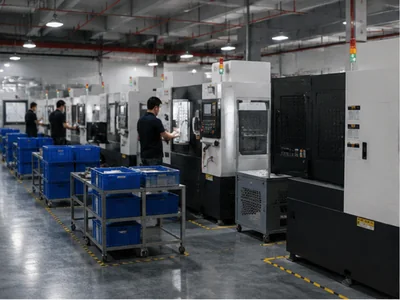
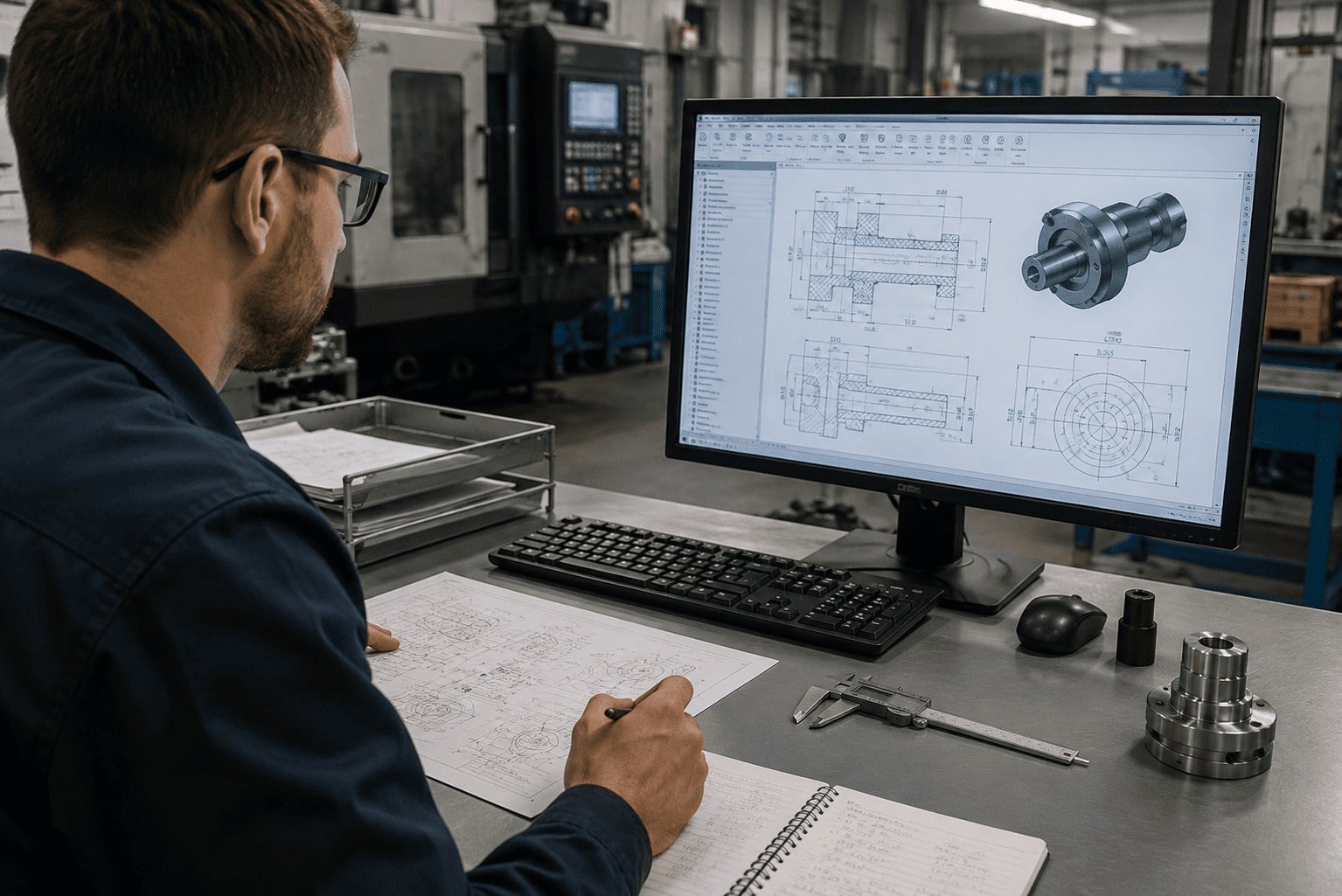
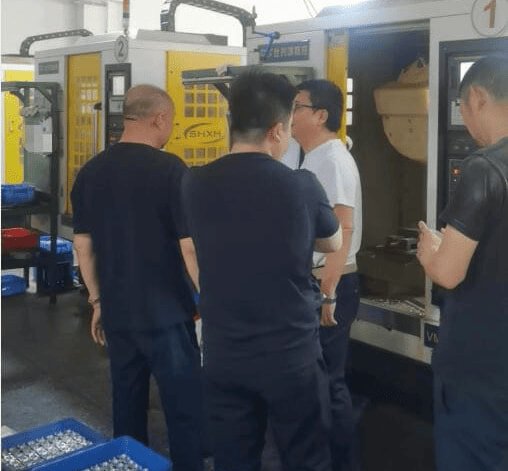
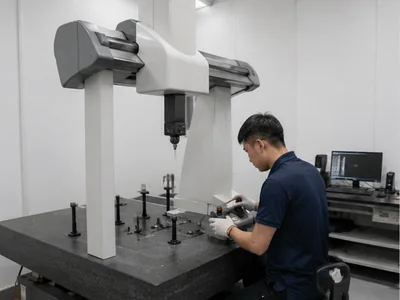
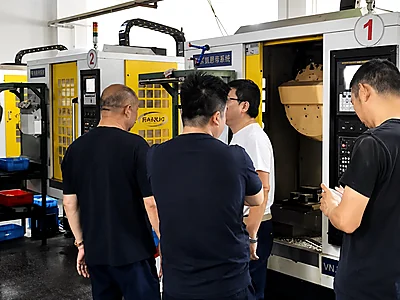
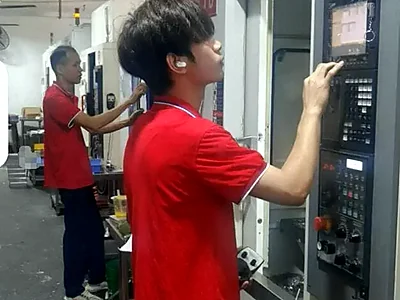
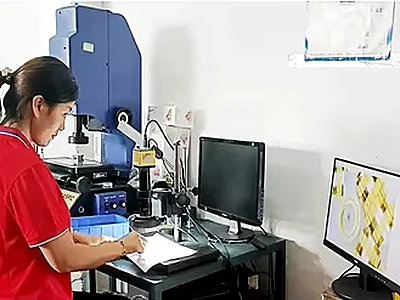
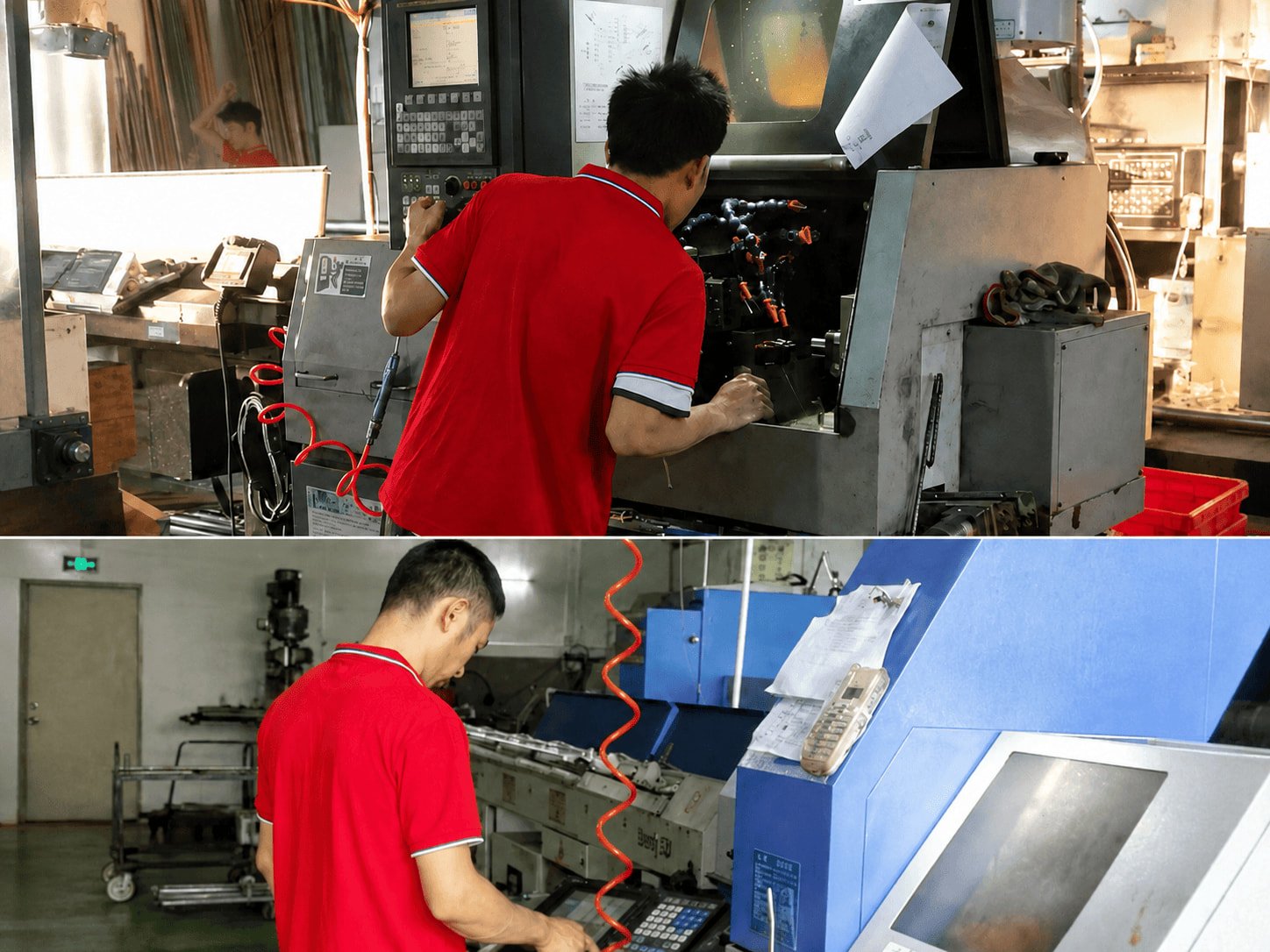
See How LuckyHxs Parts Move from Production to Inspection
Watch a real factory workflow covering machining, handling, inspection and production support.
Which Stainless Steel Grade Is Best for CNC Machined Parts?
There is no single "highest-quality" stainless steel grade for every CNC part.
Selection should be based on the corrosion environment, machinability, strength, hardness, threads, surface requirement, production quantity, finishing, cost, and application. Do not simply write "Stainless Steel" on your drawing.
303 Stainless Steel
Use when machinability is a major priority and the service environment allows the selected grade. Excellent for high-volume precision turning.
304 Stainless Steel
A common general-purpose option for many industrial CNC components. Harder to machine than 303, requires better tool management.
316 / 316L Stainless Steel
Consider where the service environment requires stronger corrosion performance (e.g., chlorides). Machining is slower and tool wear is higher.
416 Stainless Steel
Consider for suitable projects where machinability and mechanical requirements align (martensitic). Can be heat treated.
Specify the exact Grade, Standard, Condition (if relevant), Surface Finish, Corrosion Requirement, and Inspection Requirement on your drawing.
Why Is Stainless Steel Difficult to CNC Machine?
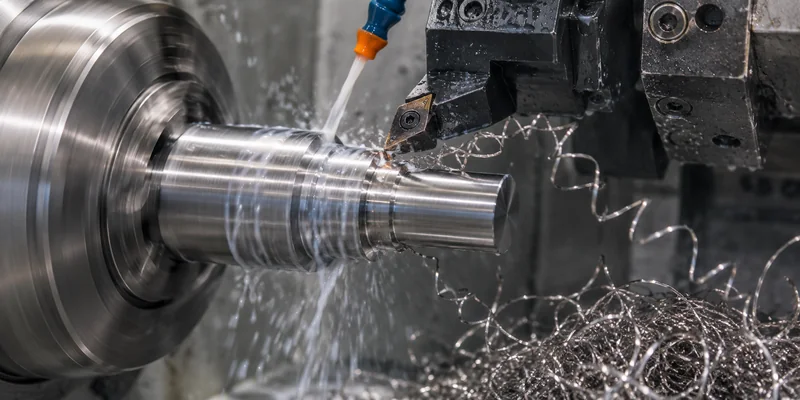
The difficulty depends on the exact stainless grade, part geometry, tooling, setup, and tolerance requirements. It is not universally "impossible," but it requires specific controls.
Challenge 1: Work Hardening
The material surface hardens as it is cut. If the tool rubs instead of cutting cleanly, the next pass becomes extremely difficult, destroying the tool.
Challenge 2: Heat Concentration
Stainless steel has poor thermal conductivity. Heat stays at the cutting edge instead of leaving with the chip, causing tool failure and part distortion.
Challenge 3: Tool Wear
High cutting forces and heat lead to rapid tool degradation, causing dimensional drift in batch production.
Challenge 4: Stringy Chips
Particularly in austenitic grades (304/316), chips do not break easily. They wrap around tools and scratch finished surfaces.
Challenge 5: Built-Up Edge & Burrs
Material welds to the cutting tool, leaving poor surface finishes and severe burrs on small features and cross holes.
Challenge 6: Thread Quality
Tapping small internal threads is high-risk due to work hardening and chip packing, leading to broken taps and galled threads.
- • Material Experience
- • Process Choice
- • Tool-Wear Control
- • Thread Inspection
- • Burr Control
- • In-Process Inspection
- • Repeat-Batch Control
How Do You Choose a Stainless Steel Parts Manufacturer?
A suitable manufacturer should be evaluated against your specific drawing—not against generic claims such as "high precision" or "best quality." Use this 10-Point Buyer Checklist.
-
1.
Can They Confirm the Exact Stainless Grade?
Do they understand the difference between 303 and 304 for your application?
-
2.
Do They Support the Right Process?
Turning, Swiss, Turn-Mill, Milling depending on geometry.
-
3.
Can They Control Functional Datums?
ID, OD, Runout, Concentricity, Hole Position.
-
4.
How Do They Inspect Threads?
Beyond simple gauge passing, checking for entry burrs and alignment.
-
5.
How Do They Control Burrs and Internal Chips?
Especially critical for fluid control and valve components.
-
6.
How Do They Handle Thin-Wall Parts?
Free-state measurement vs. clamped measurement.
-
7.
Can They Manage Surface Finish and Cleaning?
Preventing free-iron contamination and handling marks.
-
8.
How Do They Move from Prototype to Repeat Production?
Tool wear monitoring and batch consistency controls.
-
9.
What Inspection Records Can Be Supplied?
Material certs, dimensional reports based on your requirements.
-
10.
How Are Drawings Protected?
Confidentiality and IP protection.
Frequently Asked Questions About Stainless Steel CNC Parts
What stainless steel grades can be CNC machined?
What is the best stainless steel grade for CNC machining?
What are the main families of stainless steel?
What is the difference between 303 and 304 stainless steel for machining?
When should I consider 316 or 316L stainless steel?
Can stainless steel CNC parts still develop rust spots?
Can you machine small holes and custom threads in stainless steel?
How much do CNC machined stainless steel parts cost?
Do you sell standard stainless steel screws, fittings or replacement parts?
What information do you need for a stainless steel parts quote?
Need Stainless Steel Parts That Still Fit After the Sample Is Approved?
Send your 2D/3D drawing, stainless steel grade, quantity, critical dimensions, threads, functional datums, surface finish, and operating environment. Our team will review machining risks and inspection requirements before quotation.