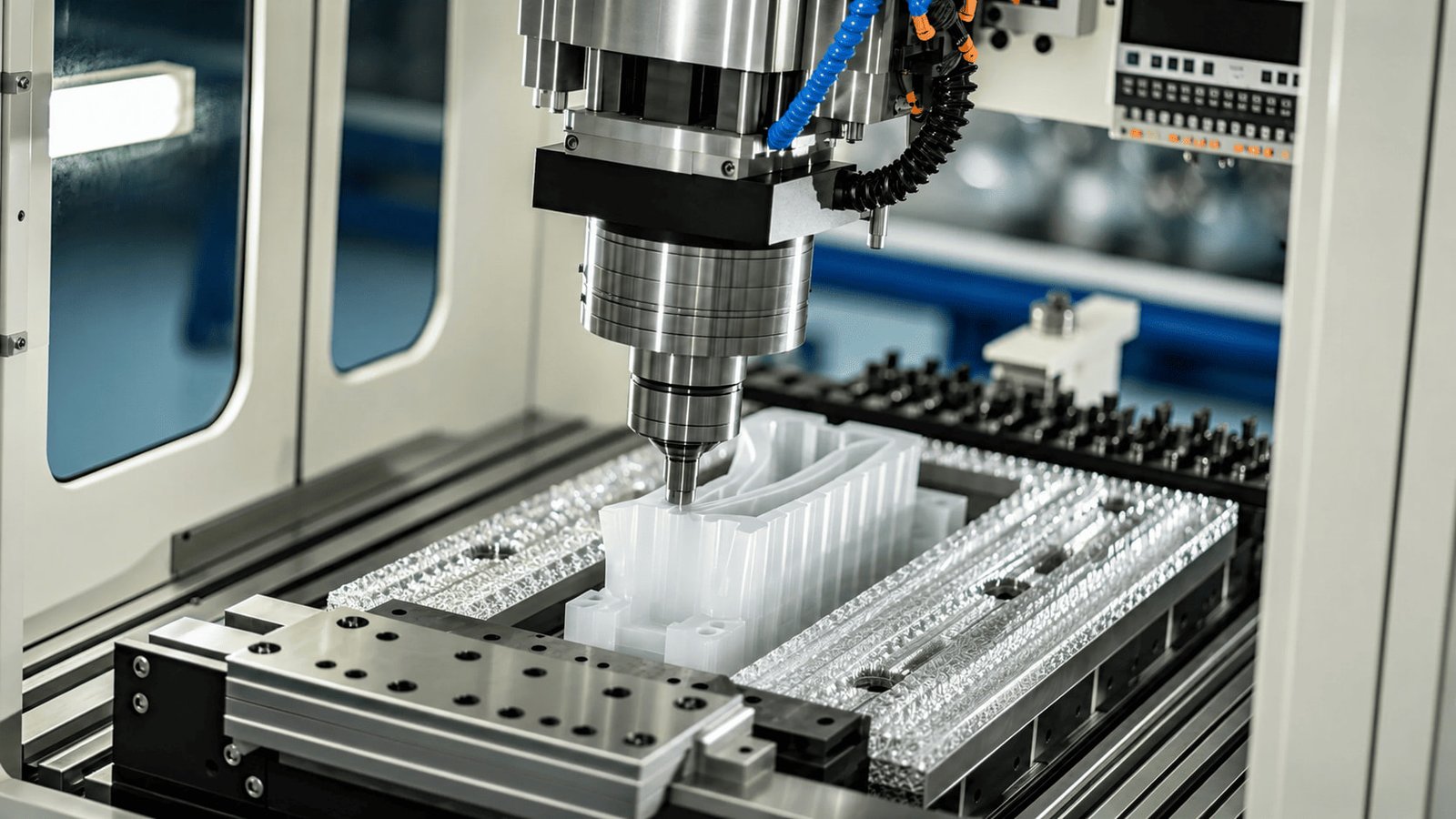
CNC Plastic Machining Manufacturer for Custom Parts
Precision plastic CNC machining services for POM, PEEK, PTFE, nylon, ABS, plastic CNC milling, plastic CNC turning, bushings, spacers, insulators, sleeves, guide parts, custom plastic CNC machining parts, and OEM plastic components from prototype samples to batch production.
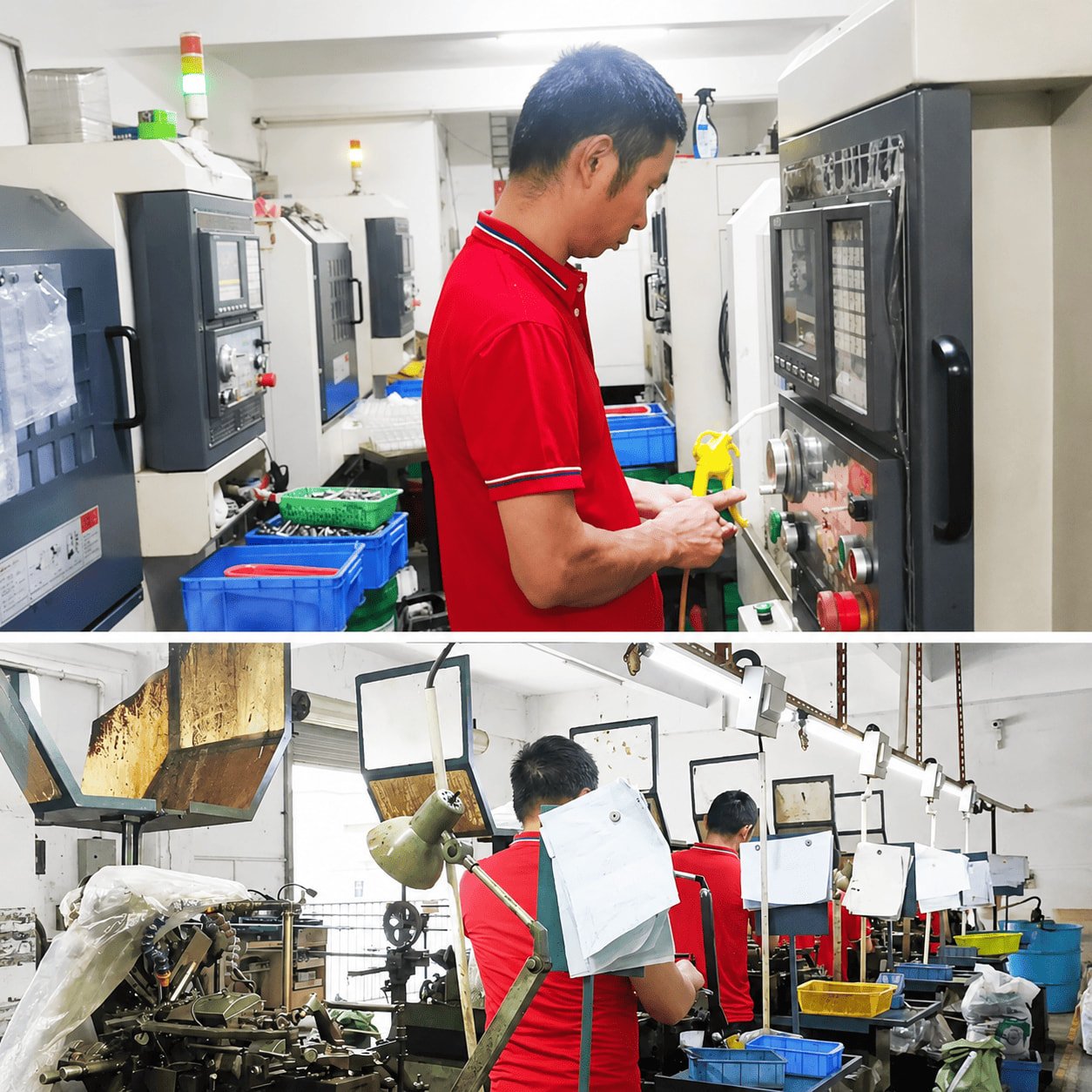
Custom Plastic CNC Machining at a Glance
Looking for custom machined plastic parts?
LuckyHxs manufactures parts according to drawings. We do not sell CNC routers or plastic cutting machines.
What Is Plastic CNC Machining?
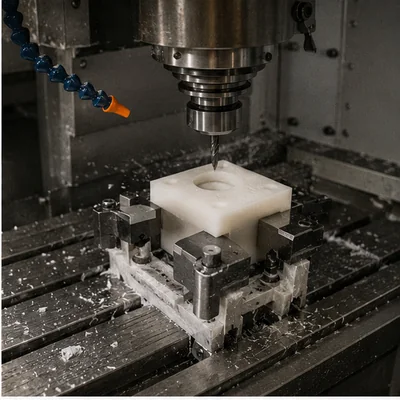
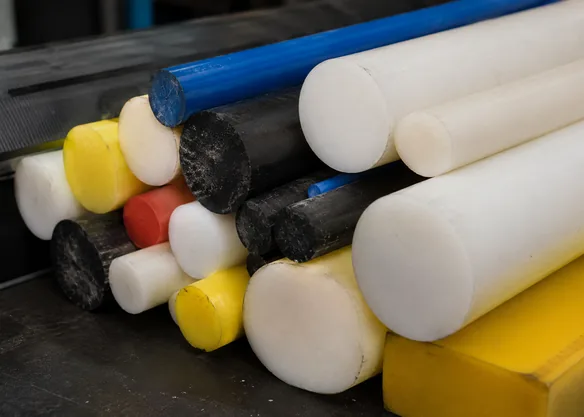
CNC machining removes material from plastic plate, rod, block, tube, or suitable stock to create precise custom components. Unlike molding, it requires no tooling investment, making it ideal for custom geometry.
Forms Complex Geometry:
- • Pockets & Cavities
- • Precision Bores
- • Internal/External Threads
- • Grooves & Cross Holes
- • Turned Diameters
- • Multi-Face Geometry
Why Buyers Use Plastic CNC Machining:
Procurement managers and engineers rely on plastic CNC machining for prototypes, functional testing, engineering-grade stock requirements, low-to-medium volume production, and repeat OEM parts where custom dimensions are critical.
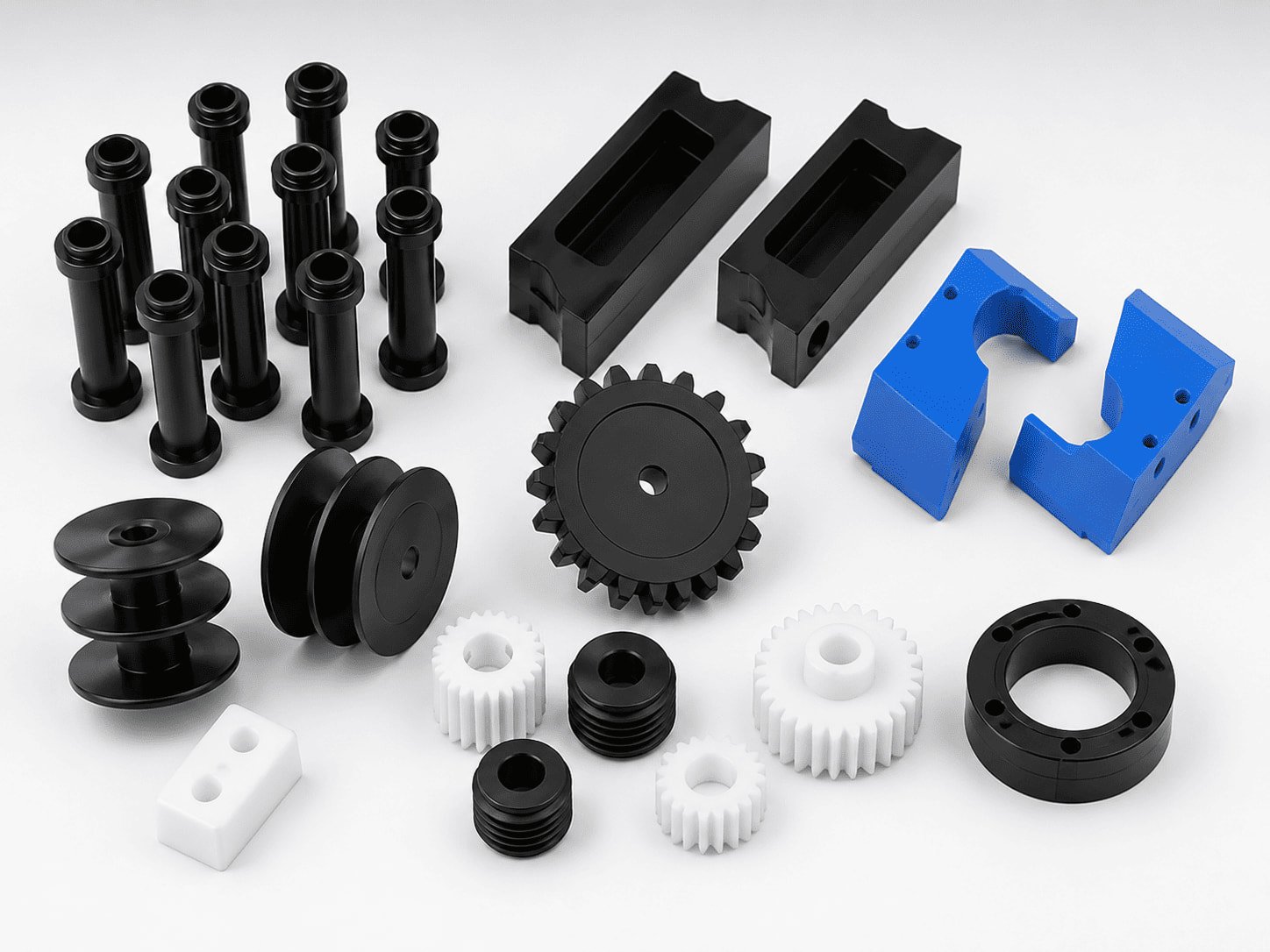
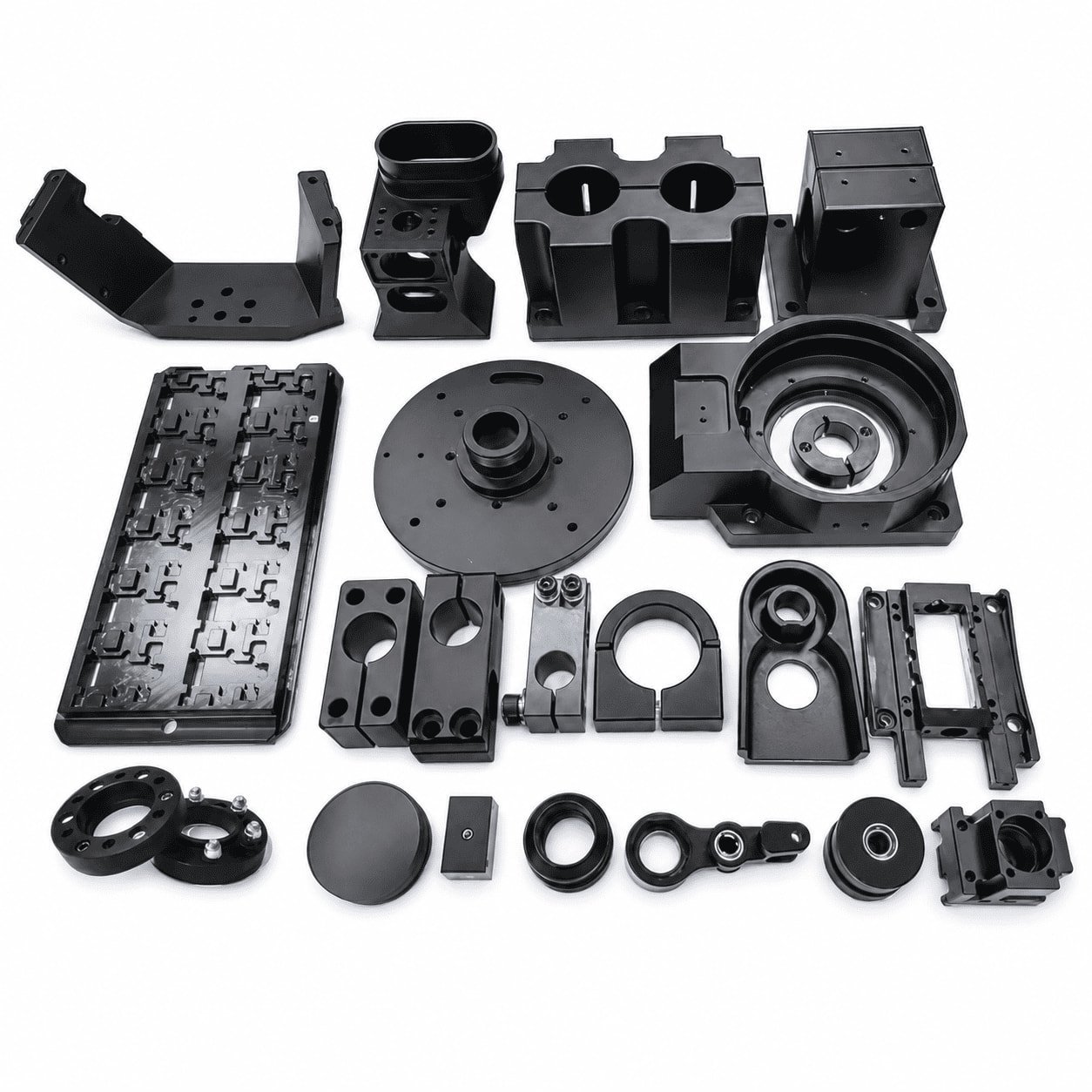
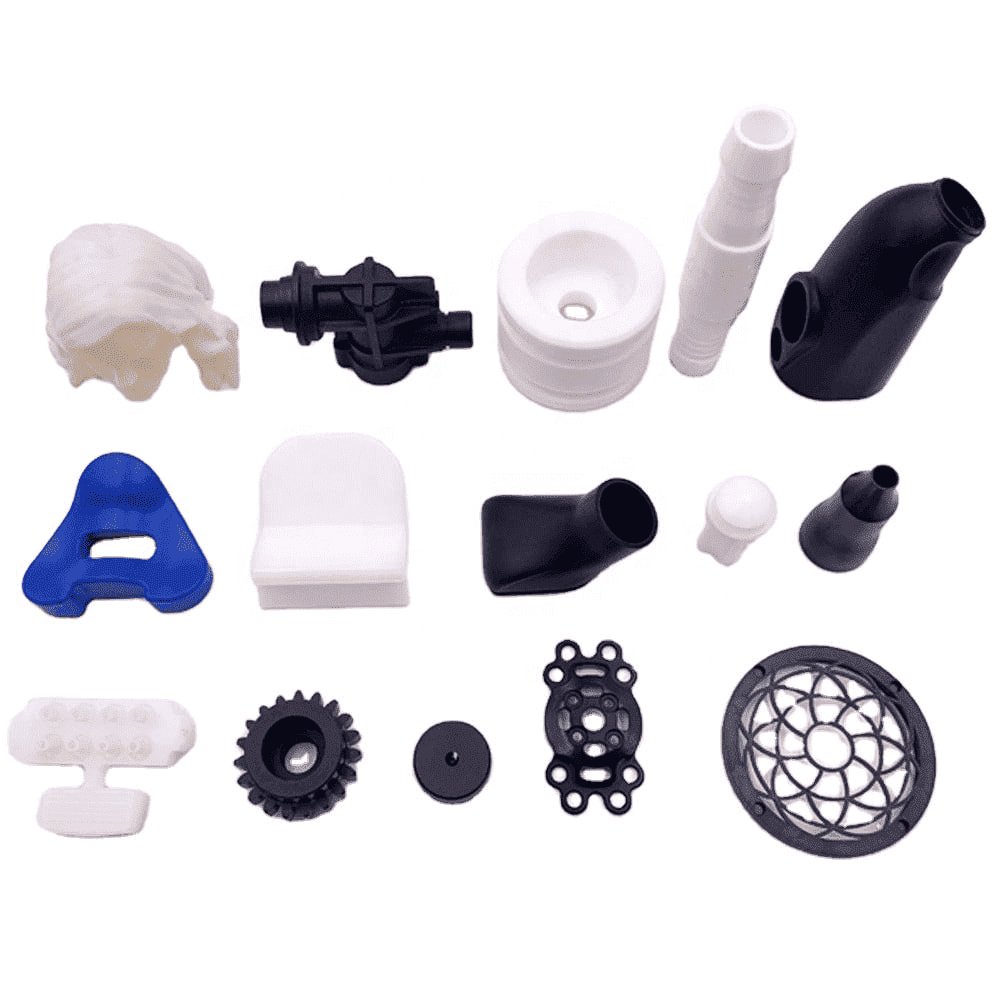
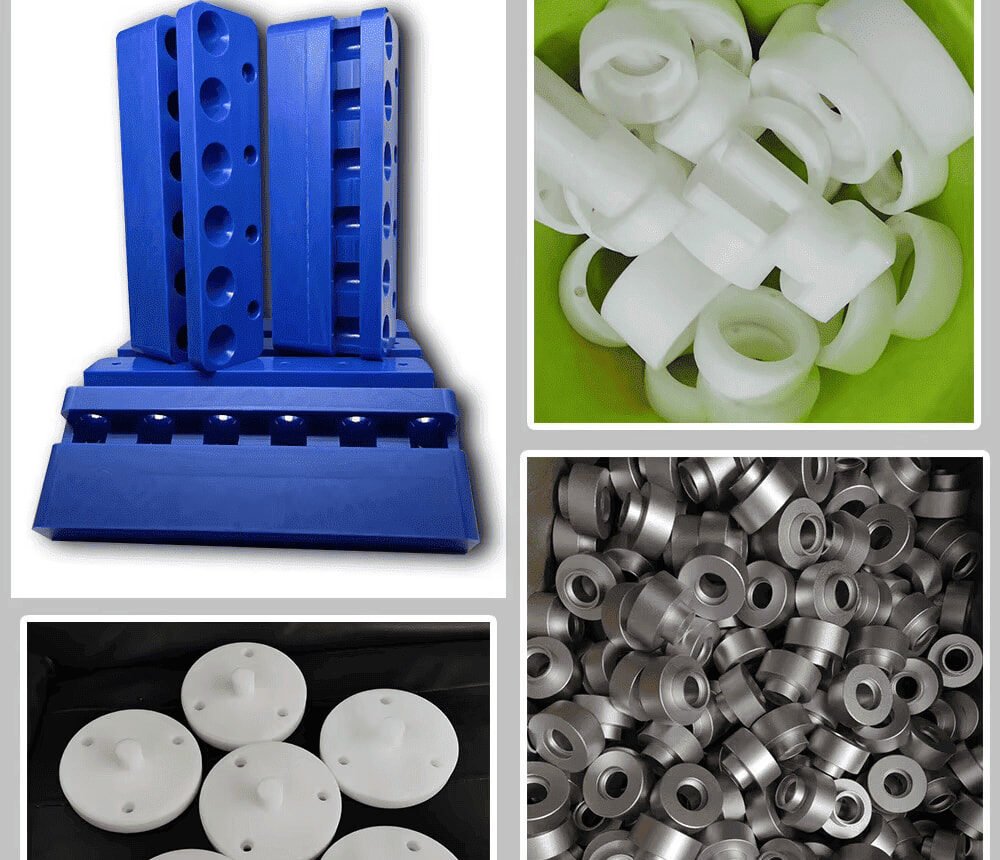
Custom Plastic Parts We Machine to Your Drawings
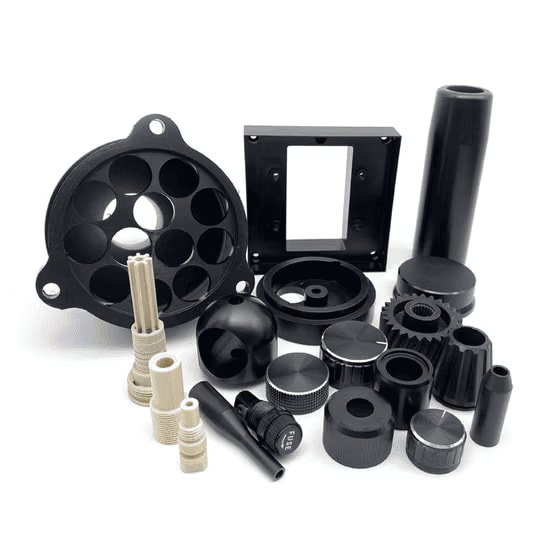
Custom Plastic Housings & Enclosures
A plastic housing can meet individual dimensions and still fail assembly if residual stress, heat or thin-wall geometry changes the final shape after machining.
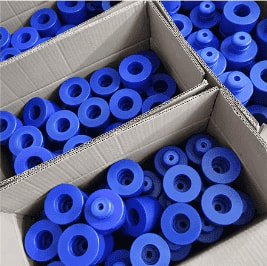
Plastic Bushings, Sleeves & Guide Components
A plastic bushing is not controlled by diameter alone. Material behavior, bore finish and environmental conditions change the final functional fit.
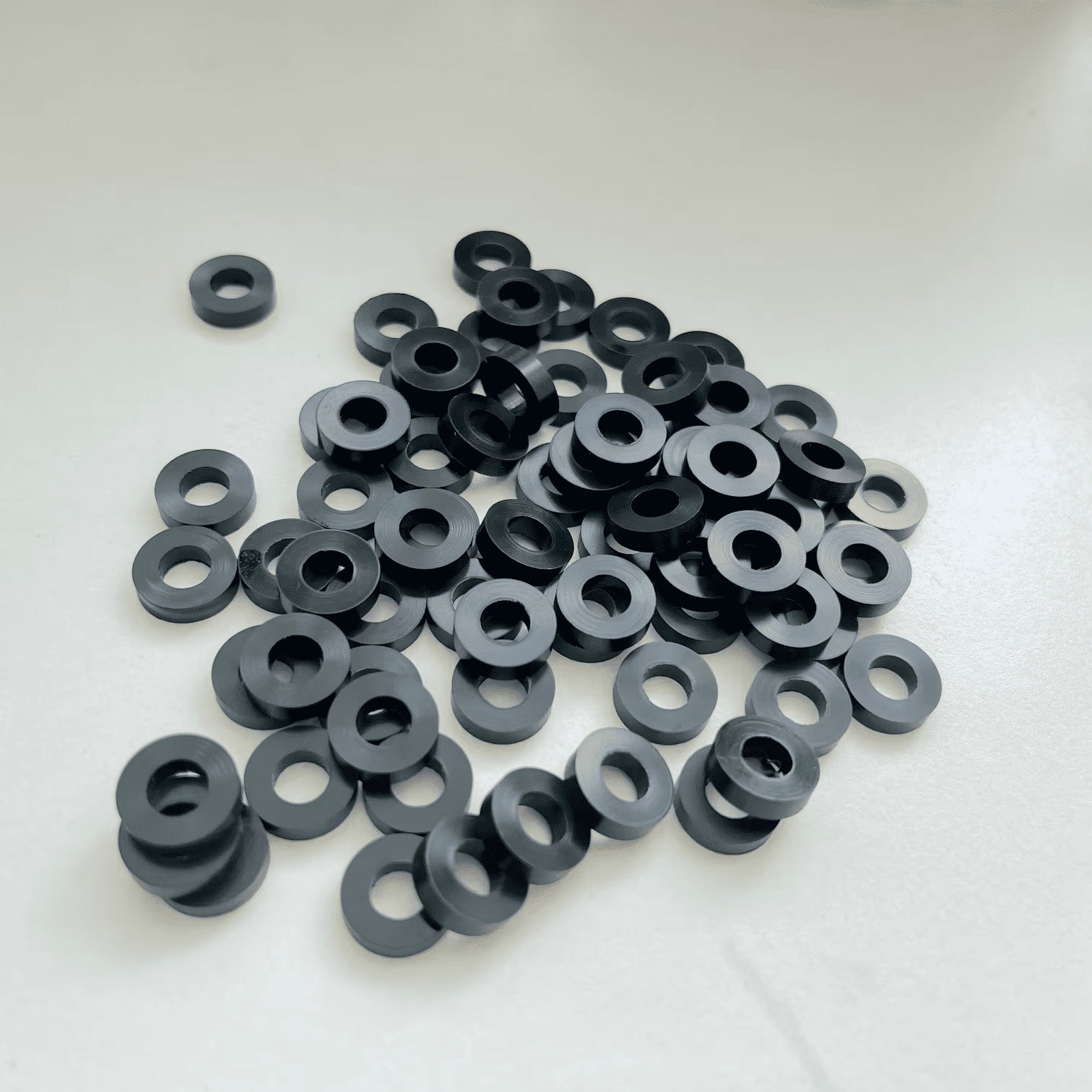
Plastic Spacers, Insulators & Standoffs
Designed for spacing, electrical isolation, positioning, and lightweight support in complex electronic and mechanical assemblies.
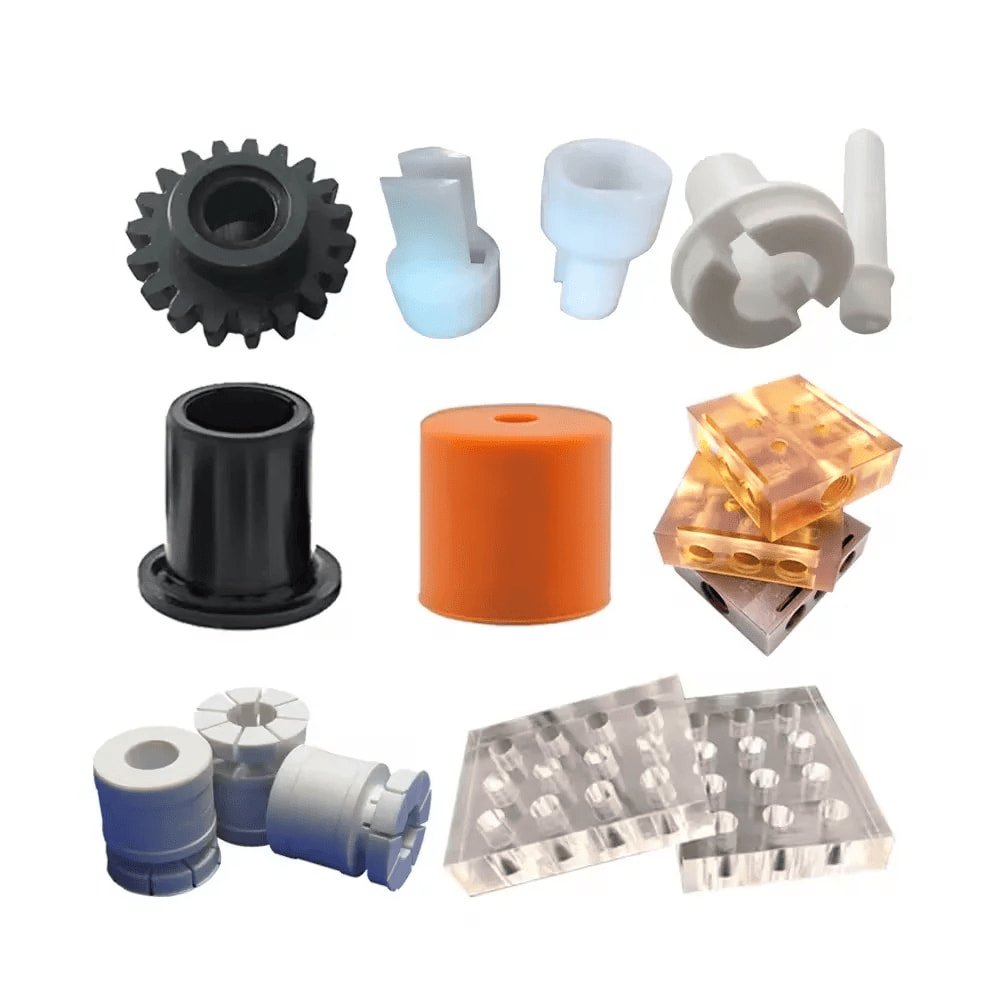
Plastic Valve, Nozzle & Fluid Control Components
Material compatibility must be strictly reviewed against the real fluid, operating temperature and chemical environment prior to machining.
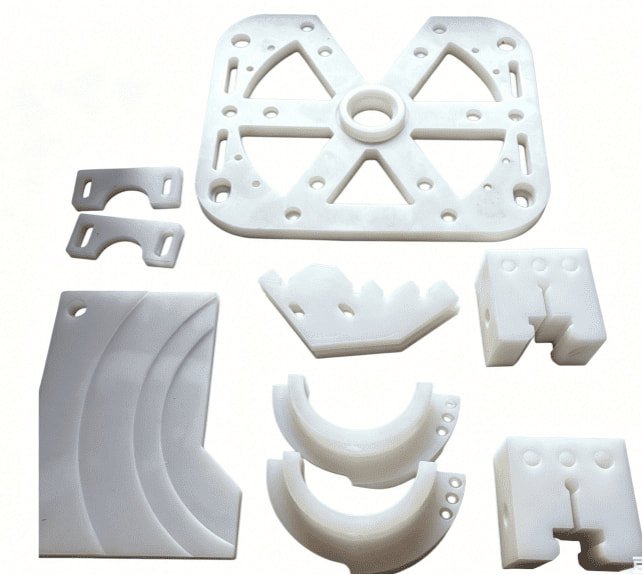
Plastic Manifolds, Flow Blocks & Channel Components
Complex CNC milled blocks requiring strict control over internal burrs, trapped chips, hole intersections, and sealing face flatness.
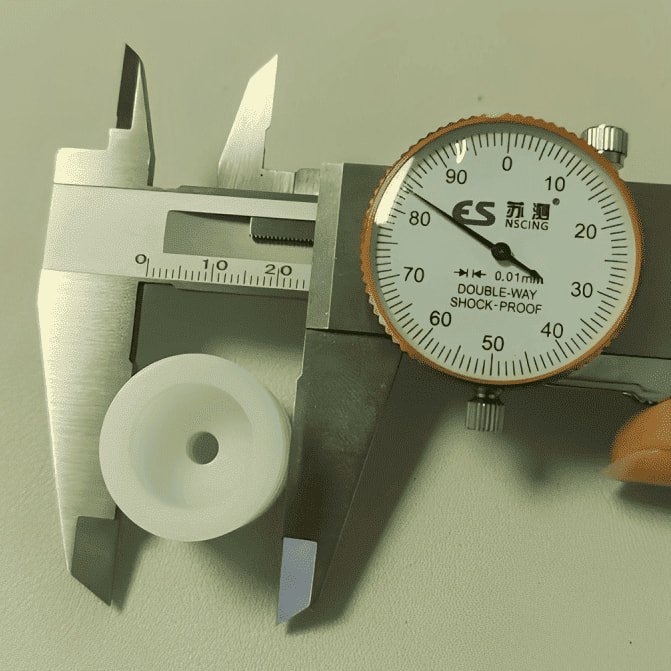
Plastic Sensor, Instrument & Electronic Components
Precision components designed for electrical isolation, low weight, and exact dimensional stability in sensitive instrument assemblies.
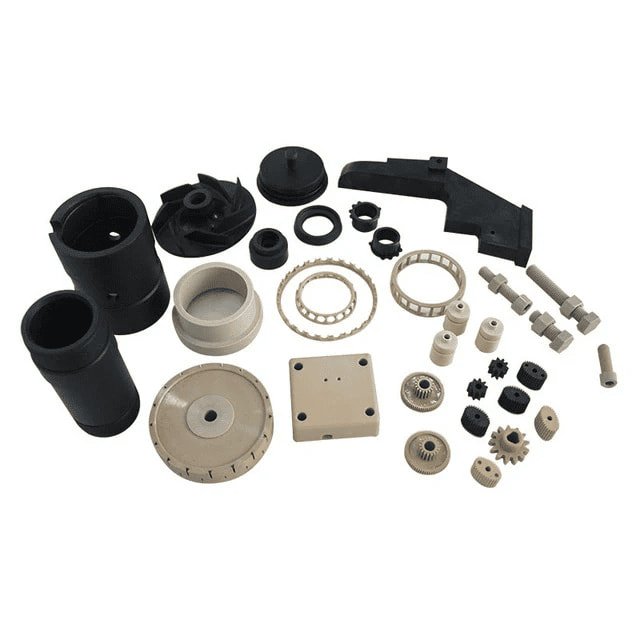
Plastic Jigs, Fixtures & Inspection Components
Fixtures depend on repeat positioning and datum relationships, not simply external dimensions. Often machined from stable POM.
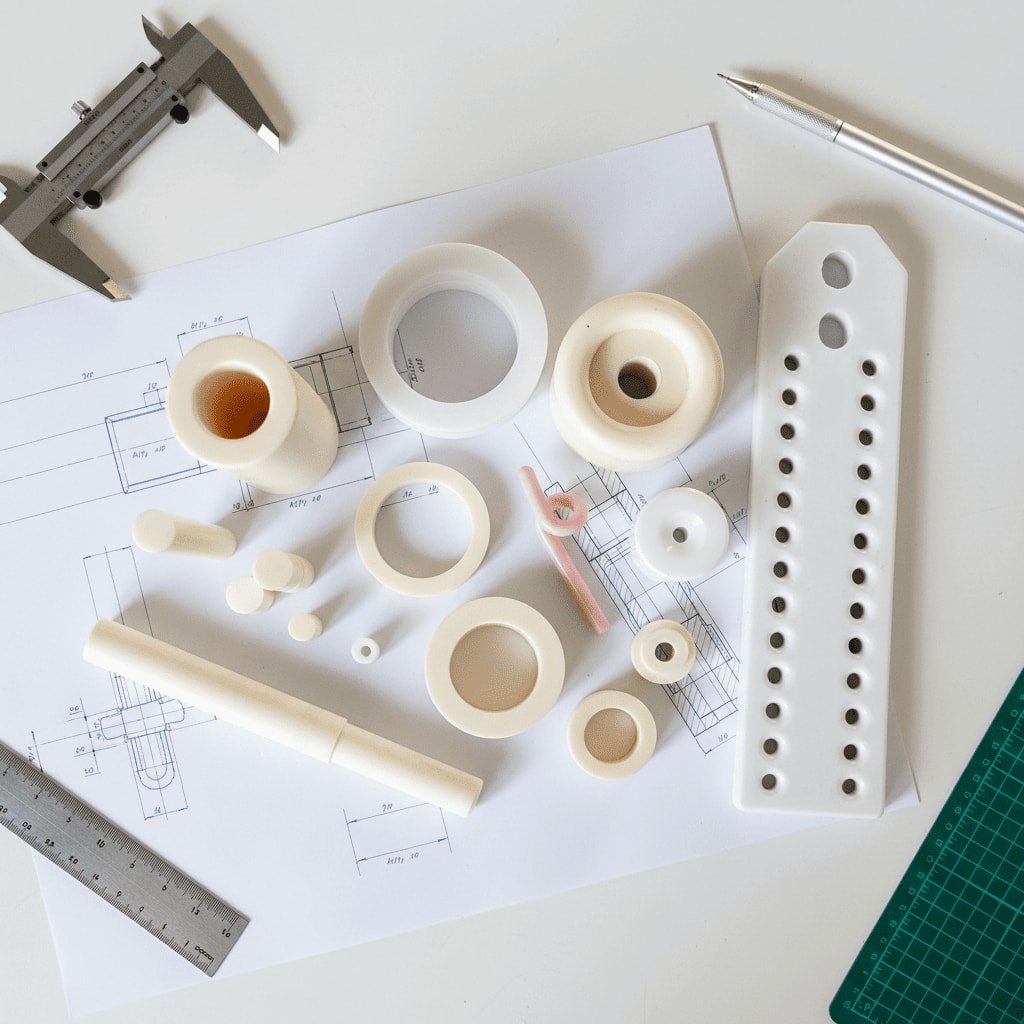
CNC Turned Plastic Pins, Shafts & Precision Components
Produced via CNC turning, Swiss machining, or automatic lathes. Batch repeatability is critical for small diameter cylindrical parts.
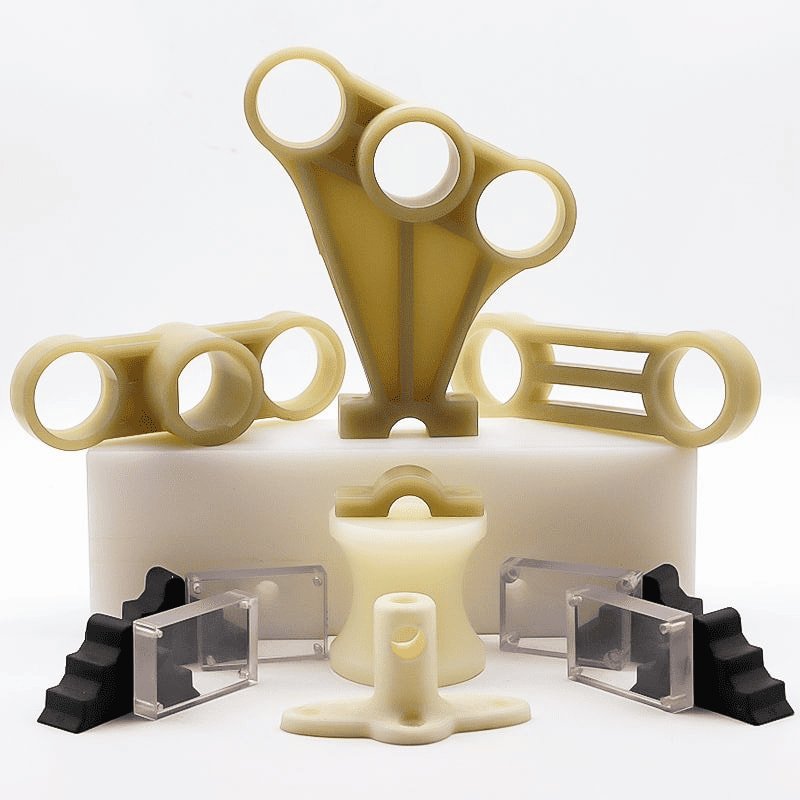
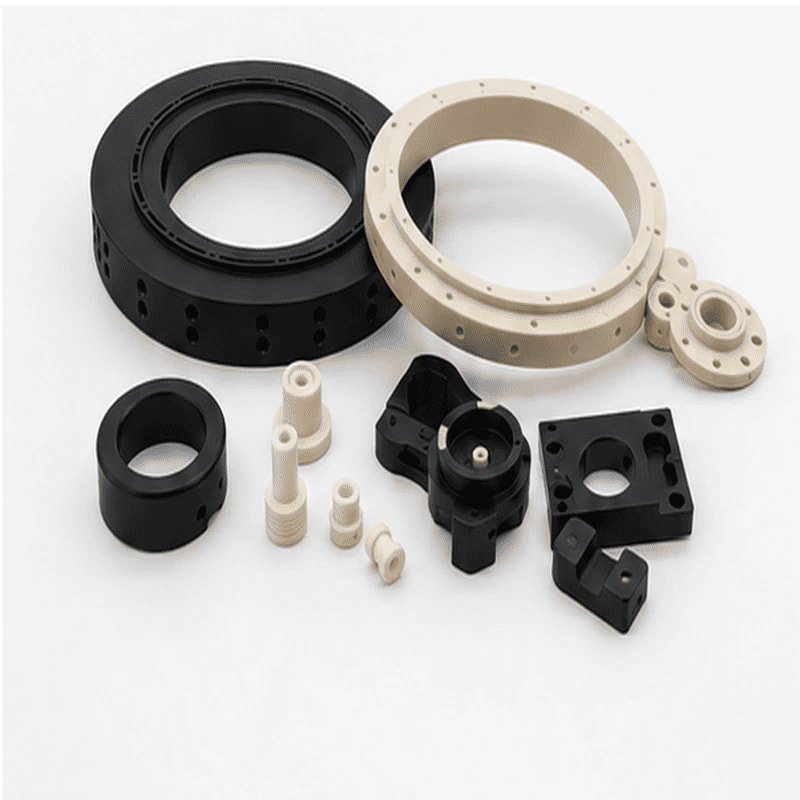
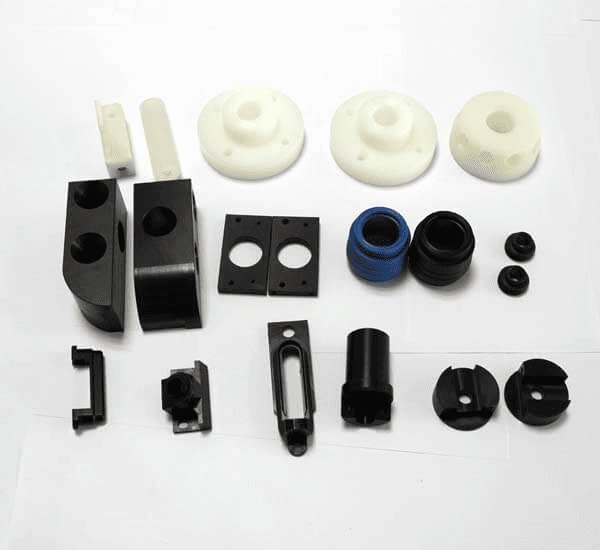
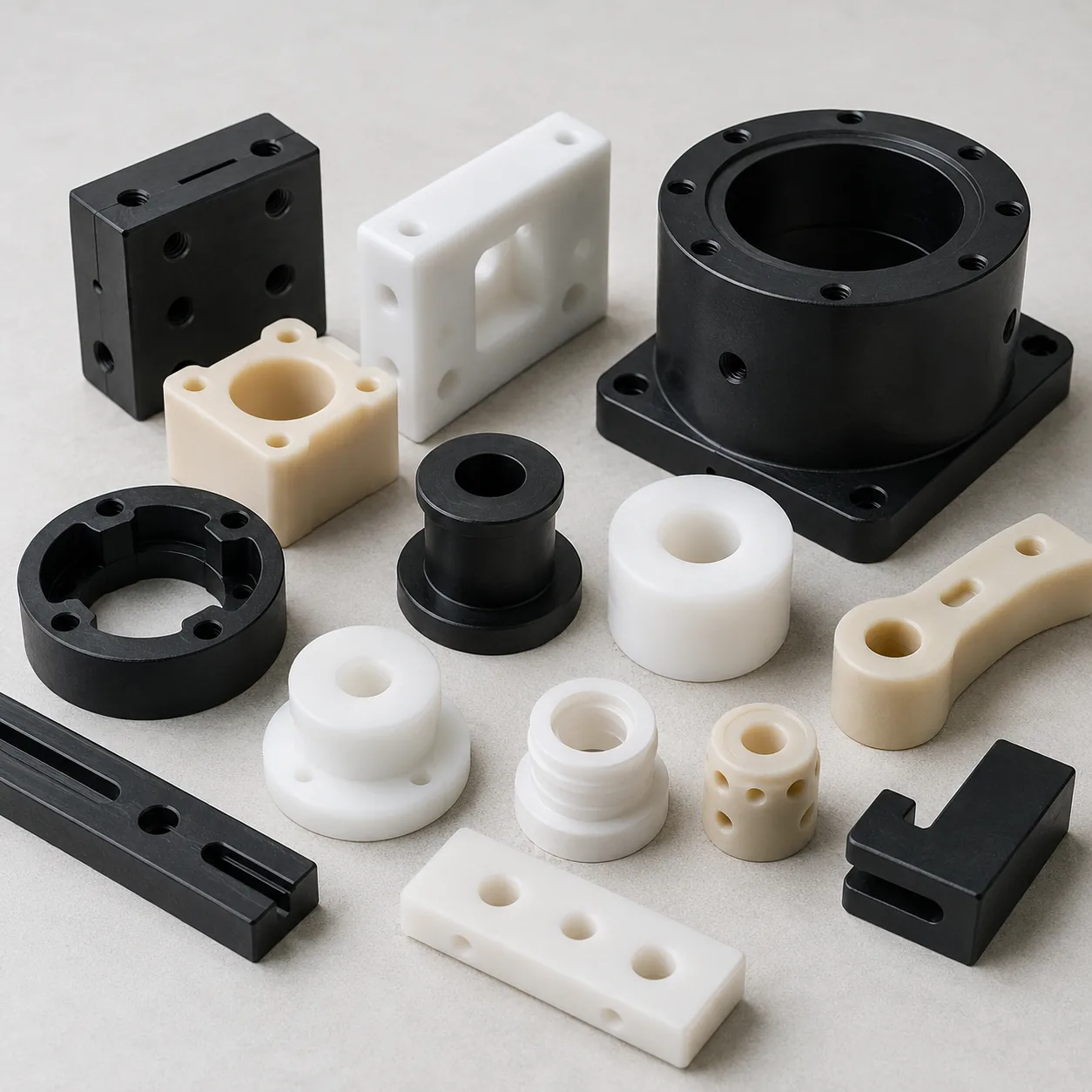
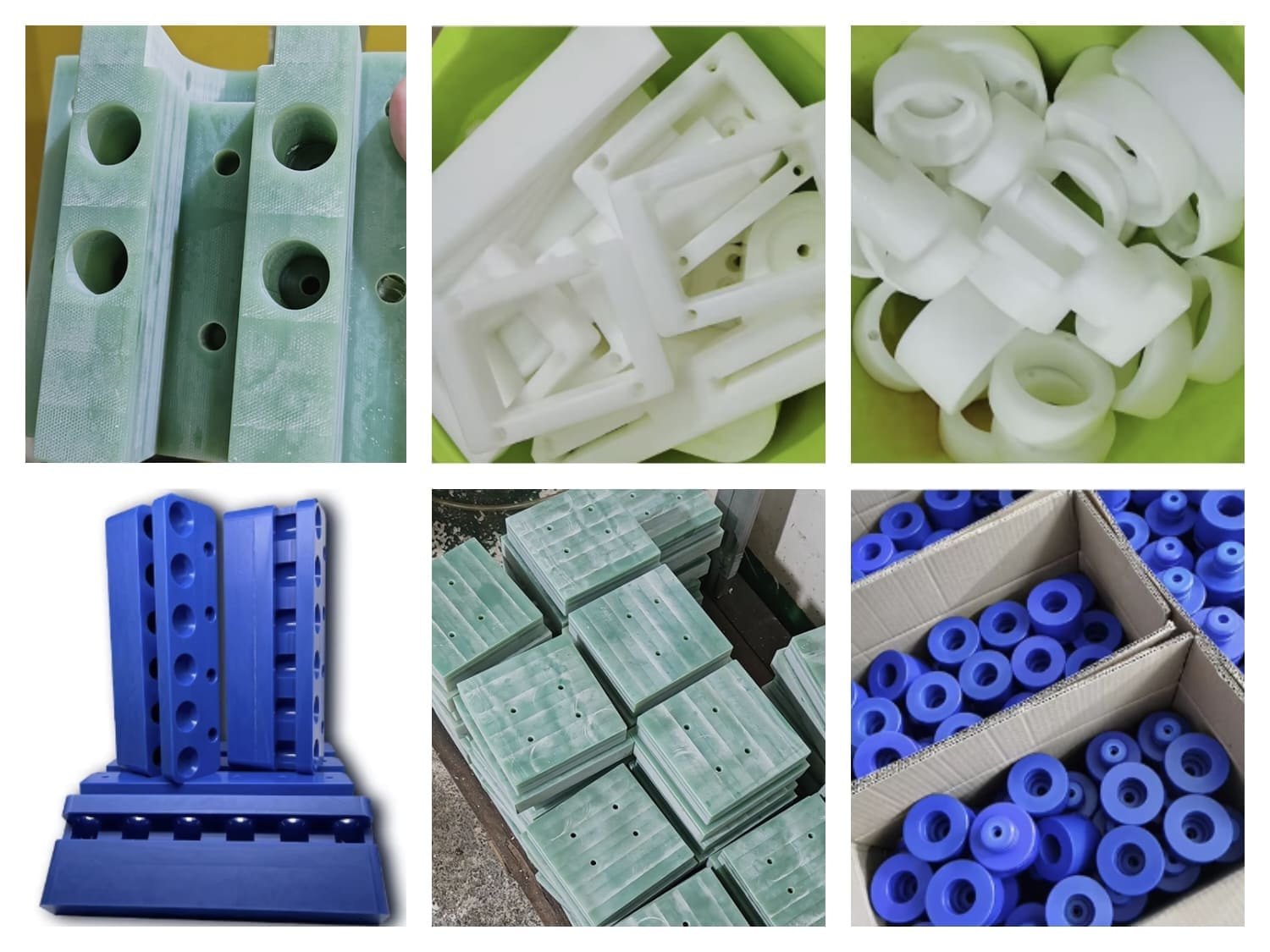
CNC Machined Plastic Components for Custom Assemblies
Engineering Plastics for CNC Machining
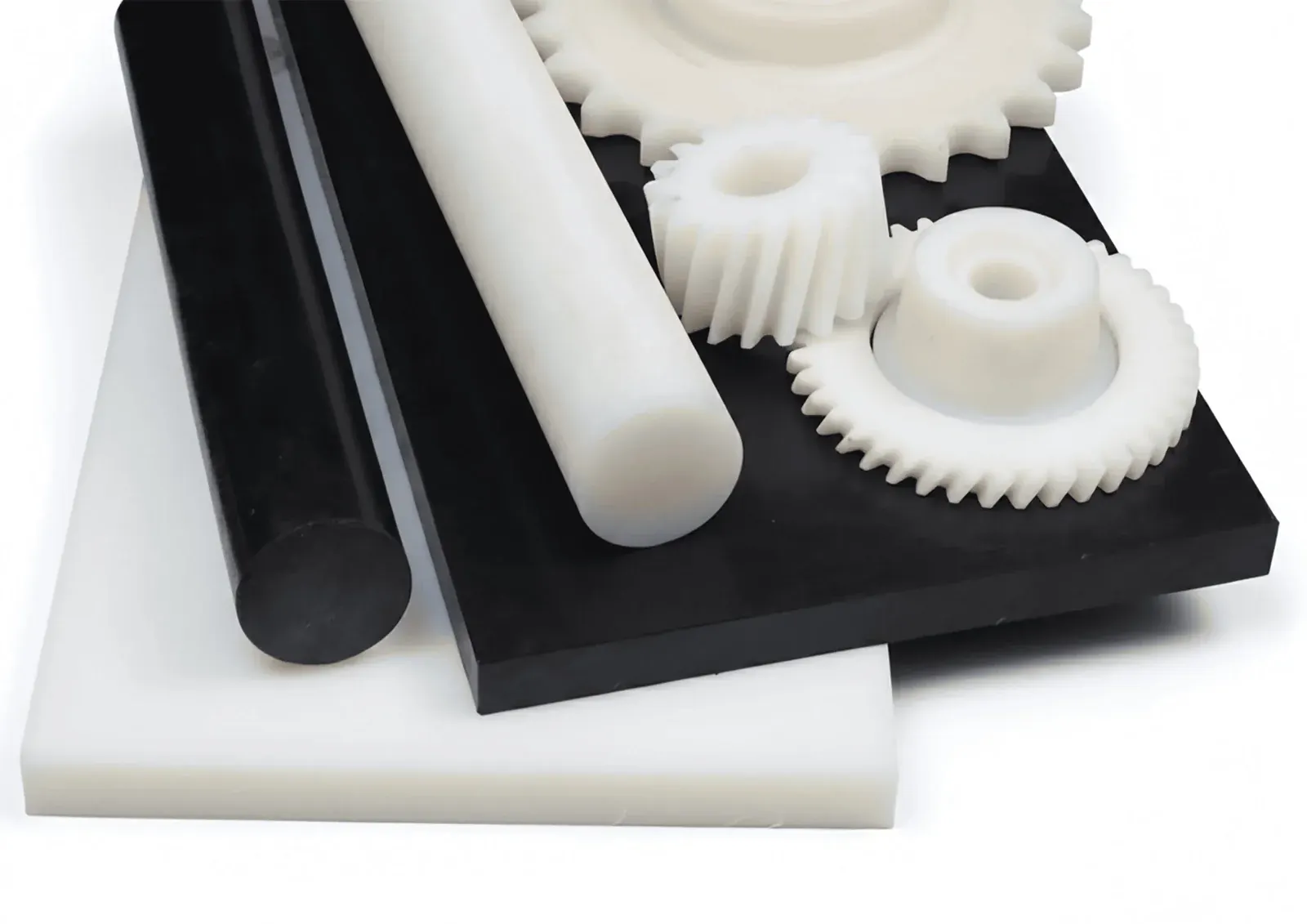
POM / Acetal
Low moisture absorption, excellent dimensional stability, good for sliding and wear, ideal for precision mechanical fits.
Bushings, Sleeves, Fixtures, Pins, Spacers.
Prone to internal stress warping if asymmetric material removal is required. Requires careful machining sequence.
Nylon / PA
High toughness, excellent wear resistance, strong mechanical components for heavy-duty applications.
Gears, Wear Pads, Heavy-duty Rollers, Structural Guides.
High moisture absorption changes final dimensions, functional fit, and mechanical properties depending on environmental humidity.
PTFE
Extremely low friction, handles aggressive chemical environments, excellent electrical insulation, great for sliding applications.
Valve Sleeves, Nozzles, Seals, Insulators.
Low stiffness leads to creep and deformation under load. Very difficult to hold tight tolerances compared to POM.
ABS
Good impact resistance, easily machinable, cost-effective for structural components and functional prototypes.
Housings, Covers, Structural Components, Functional Prototypes.
Sensitive to machining heat which can melt surfaces. Thin wall thickness requires careful feed and speed control.
Additional engineering plastics can be reviewed according to drawing, operating environment and material availability. [CONFIRM]
Choose the Plastic Around the Real Function
Choose the polymer around its function and service environment—not simply by material popularity.
POM offers stability for precision mechanical fits.
Nylon or POM depending on load and moisture.
PTFE or specialized plastics prevent conductivity.
PTFE resists aggressive industrial fluids.
Plastics replace metal for lower inertia in moving parts.
Review thermal expansion coefficients before design.
Why Plastic Parts Fail Even When the Drawing Looks Simple
1. Material & Environment Shift Final Dimensions
Temperature and moisture change the part after it leaves the factory.
2. Internal Stress & Thin Walls Cause Warping
Removing material releases stress, causing flat plates to bow.
3. Sample-to-Batch Fit Drifts
Prototypes fit perfectly, but production batches vary unexpectedly.
4. Wrong Plastic Material Causes Functional Failure
5. Machining Heat Causes Softening and Melting
6. Metal-Like Tolerance Expectations Do Not Match Plastic
7. Burrs and Fuzzy Edges Interfere with Assembly
8. Poor Bore and Machined Surface Quality Affects Fit
9. Coolants or Chemicals Trigger Stress Cracking
10. Moisture Absorption Changes Final Part Dimensions
Material & Environment Shift Final Dimensions
Machined Dimension ≠ Service-Environment Dimension
The Challenge
At Factory: ID PASS, OD PASS, Fit PASS.
After Environmental Exposure: Bore Changes, OD Changes, Flatness Changes, Assembly Fit Fails.
Why It Happens
Different polymers respond differently to heat, humidity, moisture absorption, load, and time. Nylon swells in humidity; PTFE creeps under load.
LuckyHxs Approach
We confirm the exact material grade, review operating temperatures, ask about humidity (especially for Nylon), identify fit-critical dimensions, and review unnecessary tight tolerances that plastic cannot naturally hold.
What We Check
Material Grade | ID / OD | Functional Fit | Flatness | Critical Dimensions | Inspection Conditions
Internal Stress & Thin Walls Cause Warping
The Challenge
Typical parts affected: Plastic Housings, Large Plates, Thin-Wall Sleeves, Asymmetric Components. Problems include bowing, flatness loss, bore ovality, and post-unclamping distortion.
Why It Happens
Residual stress inside the plastic stock is released during asymmetric material removal. Excessive clamping force deforms the part during machining, and it springs back when released.
LuckyHxs Approach
We review material conditions, plan careful machining sequences, control workholding to avoid excessive clamping force, and evaluate final dimensions in a free state.
Core Principle: Measure the part after the clamping force is removed.
What We Check
Wall Thickness | Flatness | Roundness | Pocket Geometry | Final Free-State Dimensions
Sample-to-Batch Fit Drifts
Prototype Passed → Production Behaves Differently
The Challenge
The prototype has a correct fit and clean holes. During production, ID/OD drifts, flatness changes, burr levels vary, and assembly fit becomes unstable.
Why It Happens
Material lot variation, moisture condition changes, tool wear, cutting heat build-up over long runs, fixture changes, and manual deburring inconsistencies.
LuckyHxs Approach
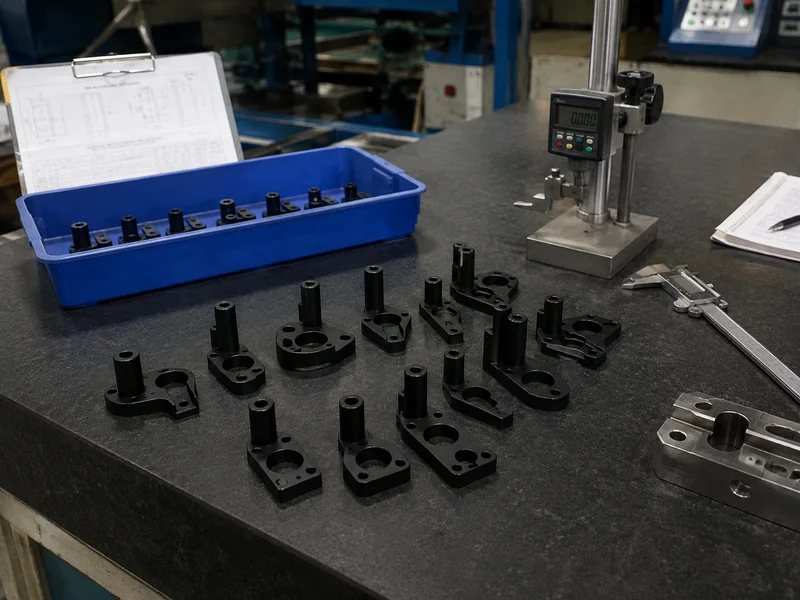
We conduct First Article Verification, identify Critical-to-Quality features, perform strict in-process inspection, review burrs, and retain repeat-order requirements to ensure batch consistency.
What We Check
Batch Consistency | ID / OD | Flatness | Hole Position | Threads | Burrs
Design Plastic Parts Around Material Behavior
Do not apply metal-part design assumptions directly to engineering plastics.
When designing Plastic CNC parts, you must simultaneously consider Material, Temperature, Moisture, Wall Thickness, Clamping, Tool Access, Residual Stress, and Functional Fit.
Thin-Wall Plastic Parts Need a Different Workholding Strategy
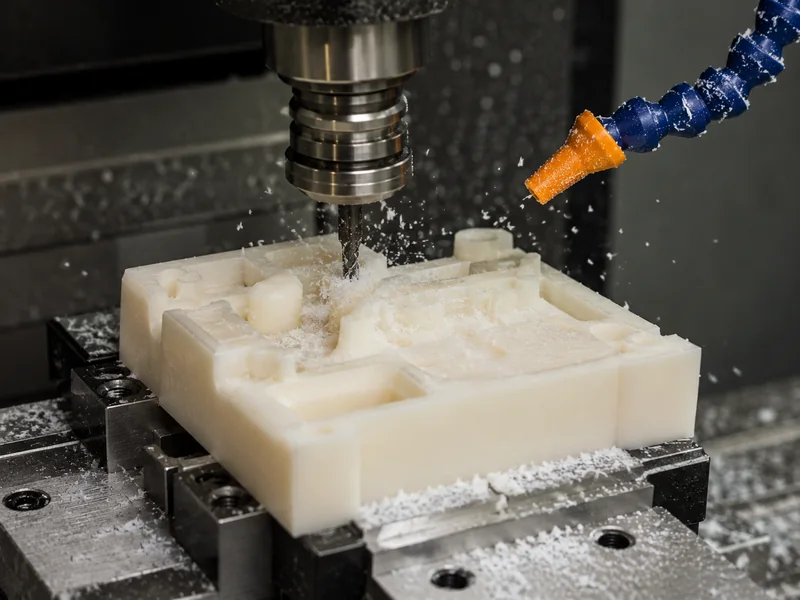
Machining thin-wall plastics requires balancing clamping pressure, cutting force, machining heat, and residual stress. If clamped too tightly, the part machines perfectly but warps the moment it is released from the vise.
- ✓ Controlled Clamping Pressure
- ✓ Optimized Machining Sequence
- ✓ Careful Heat Management
- ✓ Wall Stiffness Evaluation
Rule: Measure the part in its functional free state.
Small Holes, Threads and Burrs Can Decide the Final Assembly
Through Hole
Failure Risk
Exit breakout or fuzzy edges.
Inspection Focus
Clean exit, pin gauge fit.
Blind Hole
Failure Risk
Trapped chips at the bottom.
Inspection Focus
Depth accuracy, internal cleanliness.
Internal Thread
Failure Risk
Torn threads, weak pull-out strength.
Inspection Focus
Thread gauge GO/NO-GO, entry chamfer.
External Thread
Failure Risk
Melted crests from machining heat.
Inspection Focus
Profile clarity, mating fit.
Cross Hole
Failure Risk
Internal burrs at intersection.
Inspection Focus
Intersection deburring, flow blockages.
Precision Bore
Failure Risk
Poor surface finish causing friction.
Inspection Focus
Roundness, surface roughness.
Groove
Failure Risk
O-ring sealing failure due to chatter.
Inspection Focus
Bottom finish, width tolerance.
Entry Chamfer
Failure Risk
Missing chamfer prevents assembly.
Inspection Focus
Presence and angle verification.
CNC Processes for Custom Plastic Components
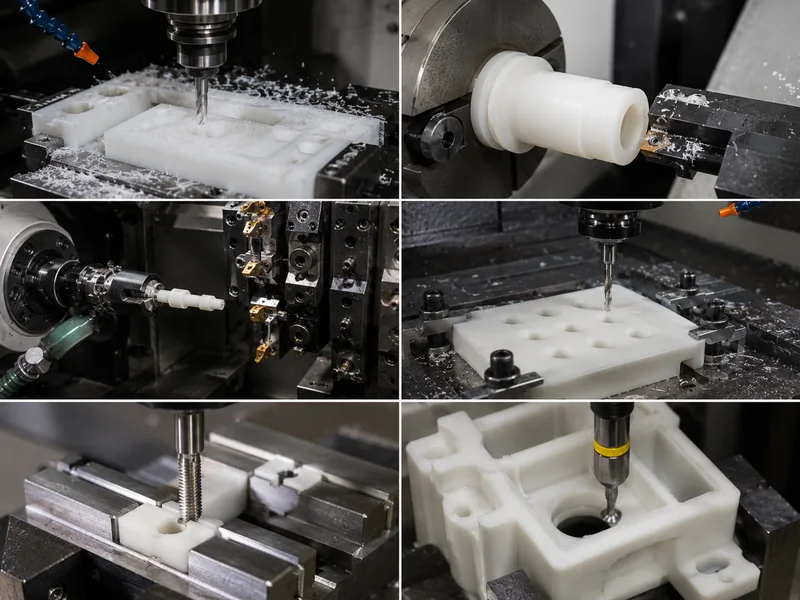
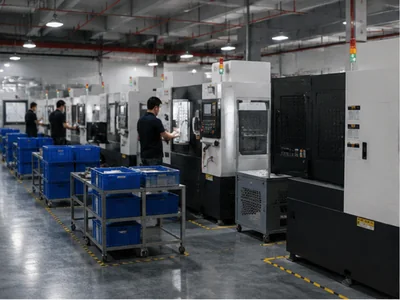
The machining route is selected according to material, geometry, wall thickness, tolerance, quantity and functional features. We do not force every part onto a single machine type.
- CNC Milling
- CNC Turning
- Swiss Machining (Where Suitable)
- Automatic Lathe
- Turn-Mill
- Drilling & Boring
- Threading & Grooving
- Cross Drilling & Deburring
Inspect Plastic Parts Around Their Real Functional Condition
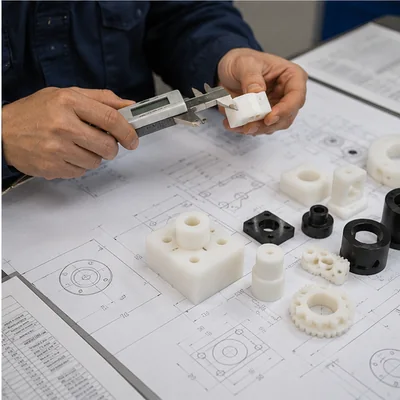
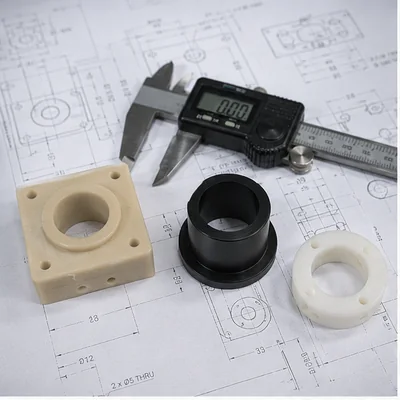
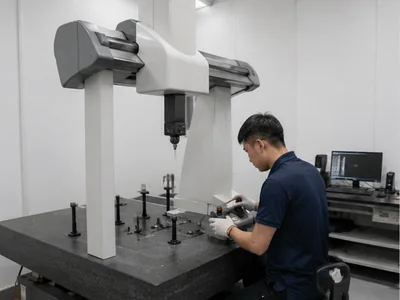
Focus areas include ID, OD, Flatness, Roundness, Hole Position, Thread Quality, Wall Thickness, Burr removal, Surface finish, and ultimately, Assembly Fit.
Where CNC Machined Plastic Parts Are Used
Industrial Automation
Typical Part: Guide Sleeves
Why Plastic: Low friction, wear resistance.
Concern: Dimensional Stability
Sensors & Instruments
Typical Part: Sensor Housings
Why Plastic: Electrical isolation.
Concern: Thin-Wall Warping
Fluid Control
Typical Part: Valve Manifolds
Why Plastic: Chemical resistance.
Concern: Internal Burrs
Fixtures & Tooling
Typical Part: Inspection Nests
Why Plastic: Non-marring contact.
Concern: Datum Flatness
Robotics
Typical Part: Lightweight Spacers
Why Plastic: Mass reduction.
Concern: Thread Strength
Electronics
Typical Part: Isolation Mounts
Why Plastic: Non-conductive.
Concern: Precision Fit
Industrial Machinery
Typical Part: Wear Pads
Why Plastic: Impact absorption.
Concern: Moisture Swell
Equipment Assemblies
Typical Part: Custom Covers
Why Plastic: Aesthetics & Protection.
Concern: Surface Finish
A CNC Manufacturing Partner You Can Verify
Certificates & Compliance Documents

What Is Plastic CNC Machining and What Parts Can It Make?
Plastic CNC machining is a subtractive manufacturing process that removes material from solid engineering-plastic stock to create custom components according to CAD models and engineering drawings. Unlike molding processes that require expensive tooling, plastic machining services offer flexibility for custom designs.
The process utilizes CNC Milling, CNC Turning, Swiss Machining (where suitable), drilling, boring, threading, and grooving to produce highly accurate machined plastic components.
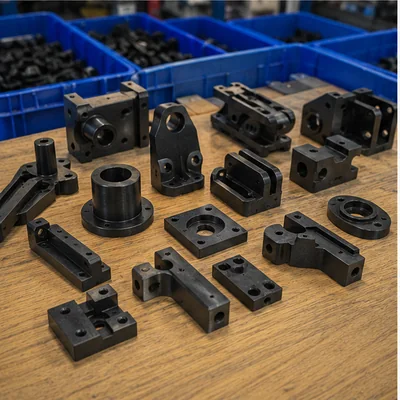
Typical machined plastic parts include: Housings, Bushings, Sleeves, Spacers, Insulators, Manifolds, Fixtures, Valve Components, Pins, and Shafts.
When CNC Makes Sense: It is highly effective for prototyping, design verification, custom dimensions, low-to-medium volume production runs, and repeat OEM production where machined threads, precision bores, and functional mating surfaces are required.
Send Your Plastic CNC DrawingHow Do You Choose the Right Plastic for CNC Machining?
There Is No Single "Best Plastic" for Every CNC Part.
| Material | Dimensional Stability | Moisture Concern | Wear / Sliding | Chemical Consideration |
|---|---|---|---|---|
| POM | Excellent | Low | Good | Moderate |
| Nylon | Variable | High (Watch Point) | Excellent | Moderate |
| PTFE | Poor (Creep) | Very Low | Excellent (Low Friction) | Excellent |
| ABS | Good | Moderate | Moderate | Low |
Engineering plastic machining requires matching the polymer to the functional intent. POM is favored for precision mechanical fits. Nylon offers toughness but requires moisture management. PTFE excels in chemical environments but suffers from low stiffness and creep.
Tell Us How the Part Will Be UsedPlastic CNC Machining vs. 3D Printing: Which Is Better for Functional Parts?
When deciding between plastic CNC machining vs 3D printing, the choice depends on material requirements, geometry, and functional fit.
Manufacturing Method & Material: CNC is subtractive, machining from solid, homogenous engineering plastic stock. 3D printing is additive, building layer by layer, which can introduce anisotropic properties (weaker in the Z-axis).
Geometry & Features: 3D printing may suit inaccessible internal geometries. However, CNC is often superior for precision bores, tight-tolerance threads, flat mating surfaces, and functional interfaces that require exact mechanical fits.
Buyer Decision Questions: Do you need production-grade stock material? Do you need precision bores or threads? Is the part visual or functional? What quantity is required?
Both can support prototyping, but for functional production where exact material behavior and tight tolerances matter, CNC machining is frequently the required path.
Ask Which Process Fits Your ProjectFrequently Asked Questions About CNC Plastic Machining
What plastics can be CNC machined?
What is the best plastic for CNC machining?
Can you machine POM, nylon, PTFE and ABS?
Can CNC machining make thin-wall plastic parts?
How do you reduce warping in CNC machined plastic parts?
Can you machine threads and small holes in plastic?
Is CNC machining better than 3D printing for plastic parts?
How much does plastic CNC machining cost?
What information do you need for a plastic CNC quotation?
Need Plastic Parts That Still Fit After Machining and Assembly?
Send your 2D/3D drawing, plastic material, quantity, critical dimensions, operating temperature, moisture or chemical exposure, thread requirements and inspection needs. Our team will review the material and machining risks before quotation.